Memories with my grandmother

Another writing prompt in Old Friend from Far Away – Give me a memory of your mother, aunt, or grandmother. Begin with “I remember…”

I remember my grandmother opening a Christmas gift from my sister and me. On Christmas morning, we rushed my parents to get ready so we could get to our grandparents house on Wilke Lake as early as possible. It was only a half hour drive away, but each minute of that morning before we got to dive into presents was like a slow torture. My uncle would have driven up from Illinois the night before, and my aunt and her husband would pick up our great-grandmother on their way out. As soon as everyone was there, it was present time!

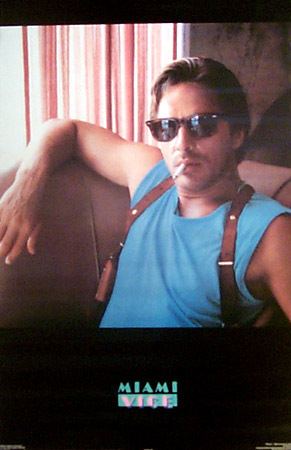
Grandma’s brown hair was cut short, permed and curly. She’s tall, thin, and wears glasses. She sat quietly smoking a cigarette in her chair while others opened gifts. Then it was her turn. My sister and I were excited to see how she’d react. We’d chosen a poster – maybe not the most practical gift for a grandma – but when we saw it, we just had to get it for her. After unwrapping the tube, she stood up to see what it was. She peeled the plastic off and wrangled the tightly rolled poster open enough to see the image. The grin on her face told us we had a hit! It was Don Johnson – Miami Vice. My grandma had a crush on him. She isn’t your typical grandma.

Learning to Fish

She taught me how to fish with a long bamboo fishing rod. It had no reel – just a fixed length of fishing line and a red and white bobber and hook at the end of the line. She showed me how to thread a wiggly earthworm onto the hook, and to gently toss the line out into the water, then watch for the bobber to dunk from sight. I stared and stared at the bobber, afraid to take my eyes off it. I was convinced fish were nibbling at my worm every time a slight wave made the bobber dip in the water. After pulling in an empty line over and over, I learned to have patience and wait until it really went under. I caught tiny pan fish – perch, bluegills, sunfish – the small fish that lingered in the water in the shadow of the pier. No one in their right mind would do anything other than toss these tiny creatures back into the water, but Grandma meticulously cleaned and cooked my catch, no matter how many fish it might take to make up a dinner.

She taught me never to panic when I got a fish hook stuck in my hand, and how to pinch a worm between my fingernails and break it in two, so I didn’t put more bait on the hook than I needed. She taught me how to scrape the scales off the fish, onto newspapers laid out on the picnic table, and how to clean the insides out just right so they were ready for frying. As I got older, she taught me how to cast with a rod and reel and how to adjust the height of the bobber and sinkers so my worm would hang lower beneath the water line. She helped me untangle the weeds I inevitably pulled in when I set the bait too low. Fishing wasn’t her only specialty, though. She could do anything and feared nothing.

Christmas Present for Grandma

She caught garter snakes and put them in a big glass jar so I could get a good look at them without running away in fear. I was a magnet for leeches when I swam in the lake. I often came out dripping wet, with the slimy back bloodsuckers stuck to my legs, feet, or toes, but she wasn’t phased by them. She sprinkled salt on the leeches which made them curl up and drop off. If that didn’t work, she torched them with her lighter until they released their hold on my flesh. When they fell, she grabbed them to use as fishing bait. She was locked in battle with a Northern Pike she named Moby Dick. She was convinced that her nemesis jumped out of the water every day, just at the edge of her casting range. He was taunting her, and she would best him one day.

My sister and I stayed at my grandparents house on weekends fairly often. We ran up and down the pier, rode around the lake on a pontoon boat (sometimes I even got to steer the boat!), and when we were big enough, took a rowboat out so we could fish further away. Lunch was a jelly sandwich with some chips and a cream soda – quickly inhaled, so we could get back to the business of running around outside. We caught frogs by the dozens and kept them in a bait box hanging next to the pier until it was so full, Grandma made us release them all so they wouldn’t die. We slept in the living room on the pull-out sofa. The sheets were crisp and clean and we fell asleep while Grandma watched her favorite shows on TV – Hee Haw, Benny Hill, Fantasy Island, MacGyver, and her favorite show of all – Miami Vice.

More exercise

On Sunday, killing time and surfing various writing websites, I decided to check for free contests to see if there was anything fitting for me to submit something from my memoir to.  I have no illusions that I’ll win – I’m too new at this, or at least, I’ve been on hiatus so long, I might as well be new at it.  I think it’s good practice, though. Anyway, I saw that there was a memoir contest – 10,000 word maximum – at Memoir (and). I was inspired – then I saw the deadline was today at Noon Pacific time and thought I might be crazy to even try. I had no time free Sunday to start, and had a job interview at 10am on Monday that lasted 3 hours. I’d have less than 24 hours to pull it off. Plus, the current draft of my memoir is more than 80,000 words – probably at least 20,000 words too long, but that’s where it stands at the moment, while I wait for feedback from my editor friend.

I decided to go for it, despite the little time I had to pull something together. I wanted to use some of the material I’d already written, so I flipped through the pages and attempted to pull out what I thought would be a cohesive, but much shorter, story. The stuff I chose was initially 20k words and some change. I spent 6 or so hours trimming it down to 15k – because my brain failed me and for some reason, morphed the max word requirements into 15k instead of 10k. When that much was done, I went back to the contest submission guidelines with a feeling of triumph. That changed to a strong desire to stick a pen in my eye when I realized I really needed to get it down to 10k. I didn’t give up, though. I kept pushing and cutting and trimming and editing, and I came up with something I was comfortable submitting – another 6 hours later. I let it sit overnight, made a few last minute tweaks this morning, and submitted it. I’m exhausted, but my instinct was right – it was really great practice. The word limit made me re-examine every word in every sentence and make tough decisions about which memories and anecdotes really carried the main thread of my story. I recommend going through exercises like this when you get the chance. It’s tough work, but it told me a lot about just how loose some of my writing was, and how much room there was to tighten it up. Mission accomplished.

Stowaway from Romania

When I started working on my genealogy research, I was particularly interested in my dad’s family because I knew so little about them.  Members of his family emigrated even later than those in my mom’s family, so you’d think we’d know more, but we didn’t.  His ancestors came from Eastern Europe, fleeing from communism and other kinds of oppression.  They were desperate to assimilate into American culture to forget the repression they’d left.  They didn’t yet trust in the place they’d come to, and they had left large parts of their families behind.  It was painful to talk about the past, and harder to forget it if they did, so they buried it and tried to make new lives here.

One family legend was that my great-grandfather, Simon, had emigrated from Romania as a stowaway on a potato boat.  People in my dad’s family love to tell this story.  It was just after the turn of the 20th century, and the Romanian government was forcing boys into the military, apparently as young as age 12.  Simon’s parents saw World War I coming, and didn’t want to see him get killed, so they tried to convince him to leave the country, but he didn’t want to.  He wanted to stay with his family.

Sometimes when my dad tells the story, Simon was drafted, but ran away and came back home.  In this version, the military found him and put him in military prison, and he escaped again.  By then, he agreed with his parents that he had to leave, so he stowed away on a ship.  Sometimes my dad says Simon escaped and was captured repeatedly.

Other times, my dad thinks he never was in the military at all, and was convinced to leave before they could draft him.  His status as a stowaway was never a question in the story, though.

Simon must have been a fairly lucky guy, because he stowed away on a ship that happened to have a hold full of potatoes, which he could eat on the trip across the ocean and still remain hidden from the crew.  When the ship eventually docked on the East Coast, story has it that he got off and panicked.  No idea where he was, and not able to speak a word of English, he went back down into the hold of the boat.  The boat then left again, travelled through the Northwest passages, and ended up in Chicago, where he decided to brave it and venture out into the world.  He was 18 and it was 1907, and that’s how my dad’s family came to be from Chicago.  So far, I have not been able to validate any of the crazy details that would confirm Simon was a stowaway, surviving on potatoes, but I’m still working on it.  All I know for sure is that he is from a small village in Romania, he ended up in Chicago in 1907, and I happen to like potatoes a lot.

Genealogy

When I first began writing about my life, genealogy didn’t figure into the picture.  I’d been doing some serious research on my family’s history for some time, but it wasn’t until later that I saw how the two subjects fit together and provided an additional framework from which to view my own experiences.  It was the show, ‘Who Do You Think You Are?’ that sparked my genealogy obsession.  The show was really an ancestry.com marketing project – each episode a short documentary that showed a celebrity’s experience tracing some branch of their family tree.  Of course, on the show, each celebrity finds some amazing information with seemingly no more effort than typing a name and birth date into a website.  They travel from city to city, or even from country to country, and have genealogy experts waiting for them at each point to tell them amazing secrets about their ancestors.  That’s not what it’s like in real life.  You can easily spend a lifetime trying to build stories around the names you can find in your family tree, especially if you come from a broken family or a family that doesn’t believe in airing its dirty laundry.  But the show inspired me to start my own research, nonetheless.

I had also been writing a little bit about my life around the same time.  At some point, it occurred to me that writing about my life could potentially save some random relative a few generations down the road from pounding their head on their desk trying to figure out what my life and my family was all about.  I also began to think about the stories of my ancestors – their triumphs and tribulations – the tragedy and stoicism – the good luck and the bad luck – and how they may have influenced me.  Many traits pass themselves down through the generations – some good, some horrible, and I started to see patterns emerging.  The idea of weaving in stories of my ancestors into my memoir struck me as having some additional value, so that’s what I’ve done.  I’ve made some amazing finds, and I’ve run into rock solid dead ends, but the research is fascinating.  I’ll share a few of my genealogy stories shortly.

Forgiveness

Forgiveness is weighty.  In my memoir, I write about many painful challenges I endured as I grew up, and some of those experiences still live with me, haunting me, exerting negative power over my life.  It wasn’t always that way.  In fact, I thought I had forgiven the people in my life that contributed to my pain, but recent events have called that into question.  I wrestle with it in my memoir, and in my mind.

It seems one of the things that sells memoirs is forgiveness.  I’ve read many articles and opinions about memoirs, and why we are drawn to them.  We all want happy existences for ourselves, but we love to read about the pain and challenges of others.  Maybe that’s because they are more true to our own experiences, or maybe it’s because it helps us feel grateful for the lives we live – we are reminded that things aren’t as bad as they could be.  But, we also love happy endings.  A memoir that is open and brutally honest is more likely to draw in readers, and my story is certainly those things.  With the honesty, though, I inherently put other people’s mistakes and shortcomings on display, and that is difficult for me, because my goal in writing is simply to express myself and my perspective – not to hurt others in the process.

That’s one reason I’m blogging anonymously for the moment.  I have to determine how to face certain people and share my honesty and my perspective with them.  It will hurt them, and while that isn’t my goal, I don’t know how to avoid it and still be honest.  In some ways, I still lean towards taking the coward’s way out.  Until I move further along in the process, and determine whether my memoir is publishable or not, I hesitate to address the issues.  If I never publish it, I never have to face these things head on. Sometimes I convince myself that if I were able to achieve real forgiveness, it’d be easier to put my writing in front of the people it will hurt – if I’ve forgiven them, maybe it’ll hurt just a little bit less.  The plain truth is that I’m just not there yet, though, and it poses a huge dilemma for me.

I don’t believe forgiveness is a simple choice.  I think it needs to come from wisdom, from generosity, from acceptance, from coming to terms with pain, from graciousness, and those are not things that simply come when I call them.  When I look at the people I have forgiven and try to understand what makes it possible for me to forgive one person and not another, it just gets more complicated.  I can’t pinpoint when forgiveness came – I just know that it did.  I can’t identify what steps I may have taken to help bring it about – I just know that I no longer harbor hard feelings in some cases, while I still do in others.  For now, I bide my time, thoughts about pain and forgiveness ruminating in my mind, mostly just staying in place – heavy, unwieldy, immovable.

Living in Falls

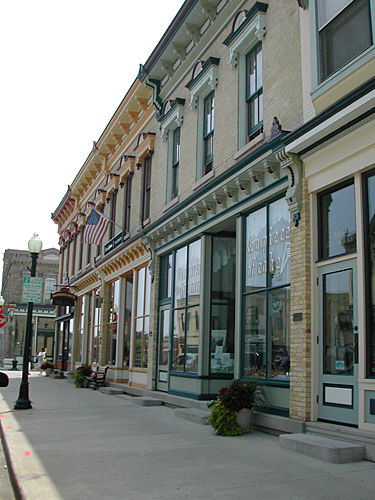
Sheboygan Falls is a little town north of Milwaukee, near Lake Michigan, and was built around the falls of the Sheboygan River in the mid-1800s.  The water over the falls was harnessed to provide power when settlement and industry first came to the area around 1835.  I graduated high school in 1991, and Falls had a population of slightly over 5000 people when I lived there.  With a total area of about 4 square miles, it’s a small community, with a quaint little main street that’s a block long, lined with cream city brick buildings, some with bands of stained glass windows across the tops of the stores.

Some of the main street buildings built in the 1850s were a flour and feed store, a tinsmith, and a drug store.  In the 1870s came a wagon shop and a grocery store.  These buildings were painstakingly restored in the latter part of the twentieth century, some complete with tin ceilings and delicate, precise, richly colorful Victorian painting on the exterior facades.  In 1995, Sheboygan Falls’ tiny downtown district was named a “Great American Main Street” by the National Trust for Historic Preservation.

Today, on the main drag, you will find a flower shop, a couple of bars and restaurants, a photography studio, a shoe store, a furniture store and a dime store.  After hours of genealogy research, I found I am related to Rick, of Rick’s House of Flowers.  At least by marriage, anyway.  The shoe store, Depke’s, was owned by my step-dad’s brother and sister-in-law.  They sold mostly squishy tan or white nurse’s shoes – I think they were called Hush Puppies – and whenever I was there I always felt like I had to be extra quiet – like I was in a library, but one where kids weren’t welcome.

The local dime store is called Evans.  It’s a time warp sort of place – when you enter, it seems you’ve stepped back in time a few decades.  They sell a little bit of everything – outdated, but cheap, clothing, old-lady bras – the kind that are pointy and were popular in the 60s, kitchen odds and ends, some games and toys, and toiletries.  I randomly found an online post that describes it well.  “…you can always stop at Evans downtown for a bizarre dime-store experience – I’ve found deodorant on sale there from 1982!”

The Villager is a popular place to go for a weekend brunch or a Friday night fish fry.  Housed in a building that held the original wagon wheel shop, then an ice cream and sweets store, the place has been beautifully restored to reflect its original appearance.  I’ve been told by many people not from Wisconsin they have no idea what a Friday Night Fish Fry is.  Lots of restaurants in Wisconsin serve fried fish on Friday nights.  I imagine the phenomenon started because of the Catholic restriction against eating meat on Fridays.  Wisconsin is full of lakes and local freshwater pan fish are plentiful.  The most traditional fish to eat on Fridays where I grew up is perch.  If you’re ordering perch at any time other than Friday, you refer to it differently – you’re having a fish lunch or a fish supper, but on Friday, it’s a fish fry.

The rest of Falls is entirely residential, unless you count the various churches that are scattered throughout the town.  Streets are wide, and homes are modest.  It’s a quiet, safe, working-class, family-raising kind of place.  At night, it seems deserted.  A local ordinance prevents anyone from parking on the street overnight anywhere in town.  It originates from the need to keep roads free of cars so the snowplows can clear them in winter, but the parking ban extends year round.  When someone has visitors and needs to park on the street overnight, a quick call to the police department gets approval so the car won’t be ticketed.

Quaint and quiet as the town is, as a teenager, I had the most boring existence you could imagine.  There was nothing that counted as entertainment except a bowling alley on the outskirts of town, and you can only go bowling so many times before it gets pretty boring.  It’s a town of bars, churches, and a few restaurants, which is typical of small Wisconsin towns.  Even when we were old enough to drive into Sheboygan, a few miles away and a bigger city at around 50,000, outside the occasional trip to the mall or the movies, we didn’t go there that often.  Most weekends were spent hanging out at some friend’s house, watching Days of Our Lives, taped on a VCR, the latest MTV videos, or on Sundays, the Packer game, and then The Simpsons.

Occasionally my friends and I got a little creative.  One year, we all pulled CB radios out of our garages and basements – I have no idea how we all managed to have access to CB radios – maybe it’s a Midwestern thing – and we made up a game of car tag.  The rules were: While you were driving around town in your car, you had to give clues to your location over your CB radio.  We all had handles, because to talk on a CB radio, you need a handle.  Mine was “Red Baron” because I drove my mom’s red station wagon.  Whoever was “it” started out the game saying, “Hey everyone, what’s your 20?”  Then in turn, everyone else replied with something like, “This is the Red Baron.  I’m on the street made famous by Freddy.”  If you were “it,” your job was to drive around looking for everyone based on their cryptic clues, and when you spotted someone, flash your brights at them.  Then they were “it.”  What made the game tricky is that we never stayed in one place long, so if you weren’t nearby someone when they gave a clue, it might take a long time to find anyone.  We killed hours in the evenings wandering around town looking for each other this way.

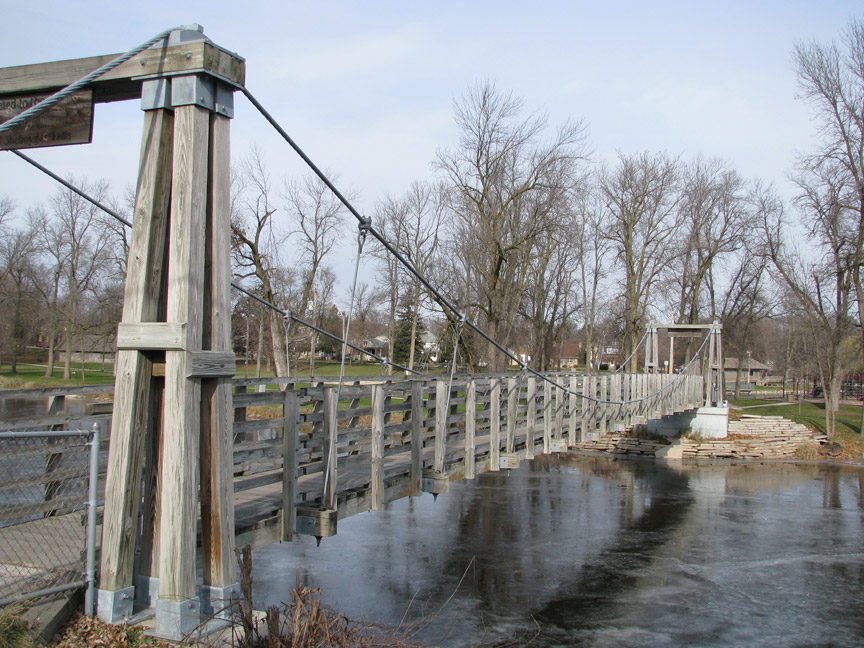
Because we lived in such a small town, we were free to roam wherever we wanted to even when we were much younger, as long as we were home for dinner or when the street lights came on.  Through junior high, I spent a lot of time outside the house, hanging out with friends.  We met at River Park, a large park built around the Sheboygan River that ran through the center of town, or played catch with a friend on the huge high school athletic field, or we rode our bikes around town from one friend’s house to another’s.  My sister and I were latchkey kids, getting ourselves off to school in the morning, and hanging out at home alone until my mom got home from work.  In the summer, we were home alone all day long.  There weren’t many rules, except that we couldn’t have anyone over to the house without prior permission, we had to do our chores every day, and if the tornado warning bell went off, we had to get into the basement right away and turn on the old AM radio to listen for weather alerts.  Sitting in the musty, dingy basement was boring after the excitement and adrenalin rush of hearing the alarm wore off.  We used it only for doing laundry and for certain kinds of storage because it got damp and anything not made of plastic got moldy.  We kept a couple beat up chairs down there for the times we were stuck waiting for the all-clear from a possible tornado.

In school, at recess during the winter, we played games that would almost certainly be banned today.  The game I loved most was “King of the Mountain.”  As snow piled up, snowplows pushed all the snow into a huge pile on one end of the playground.  When the bell rang for recess, we made a mad dash to the snow pile, which was probably a good 10 feet high or more.  Whoever scrambled up to the top first started out as King of the Mountain.  Everyone else did their best to knock that kid down, while he or she worked hard to hold the coveted position at the top of the mountain.  There were the occasional injuries – a broken arm or collarbone, and scraped faces from sliding down the icy hill when you were knocked over – but we didn’t mind the risks.  It was just good, plain, Midwestern winter fun.

What I’m reading lately

I’m reading a very odd combination of books at the moment (see Panel at right).  I have a couple courses coming up at the end of the month – part of my Master’s degree program in Organizational Leadership at Gonzaga University.  One course is called Leadership, Justice, and Forgiveness, and many of the books we are to read are memoirs or non-fiction by people that have suffered greatly, but have learned to forgive, or by people that have been part of the forgiveness process.  I’ve also been trying to catch up on the many books Jeanette Winterson has published in the past ten years.  I loved her early books – The Passion, Written on the Body, and Sexing the Cherry, in particular.  Last, since I’m writing my own memoir, I’m reading many, many memoirs, trying to analyze what makes them hum and what I don’t like.  I recently read Shania Twain’s From This Moment On, and though I found the story itself interesting, I didn’t like the writing very much.  I’d love to hear from readers what your favorite memoirs are, and why they captivated you.  How much of it was the story, and how much of it was the writing itself?

Green Bay Packers

It’s clear that I’ve benefited greatly from the things my grandparents gave me – love, support, life lessons, and exciting experiences.  One of the passions in my life – and there aren’t that many – is Green Bay Packer football.  You can’t grow up in Wisconsin and avoid football.  It’s bigger than religion and I didn’t know a single family that wasn’t fanatical about the Pack.  My grandpa was no exception, and he passed his football passion on to me.  I spent plenty of Sundays watching the game with him.  He put out cheese and crackers and sliced summer sausage, potato chips and French onion dip, cheese curds and pickles, and we watched the game in the basement, in front of a crackling fire, as we munched on snacks.  He explained the rules to me, patiently describing why someone was called for one of a thousand types of fouls, and we generally expressed our frustration that Green Bay always seemed to lose.  Those afternoons were warm and cozy when the weather outside had started to turn cold.  I was comfortable, happy, and relaxed.

Green Bay is the only NFL team that is still a publicly-owned team, and it’s the pride of Wisconsin, no matter how much they lose.  In the past 15 years, they haven’t done so badly – but when I was growing up, they were a losing team for a long time.  Things turned around when Brett Favre started playing in 1992, and they won a Super Bowl in 1997.  When I was in 6th grade, there was a contest at my school to see who knew the most about the Green Bay Packers.  There were probably twenty questions or so about the team and its history.  I won the contest, which made my grandpa proud.  The prize was a book about the team, which I gave to him to add to his collection.

Grandpa was a football player in his youth.  When he played, they still wore leather helmets and flimsy pads.  He was a tailback in high school, and was good enough to get a partial scholarship to college to play.  He wasn’t able to go because the scholarship didn’t cover all his expenses, and his family didn’t have the money to help him.  He always regretted he didn’t get to play college ball.  He is a devoted fan and loves the Packers almost as much as he loves shooting and hunting.  He has framed autographs from famous players hanging on a wall in his house, and God knows how many books on football and the Packers.

He was at the infamous Ice Bowl between Green Bay and Dallas in 1967.  I have no idea how he sat through that game in the open air at Lambeau Field without getting frostbitten.  The temperature at game time was -13 degrees, and the wind chill brought it to a ridiculous -40 degrees or so.  It was a championship game, though, and my grandfather wasn’t going to miss it.  His brother was with him, and wanted to leave because his feet were completely numb, but my grandpa wasn’t having it.  They stayed, and watched Vince Lombardi and the Packers pull out a win with seconds on the clock.  The victory put them in Super Bowl II and led to their second world title in a row.

Fans that hadn’t somehow gotten season tickets in the early days put their grandchildren on the waiting list, hoping by the time they are adults, a set of tickets might come available.  People that own stock in the team are fiercely prideful of their position as owners, even if they hold no actual influence over what happens with the team.  In 1997, Green Bay issued new stock for the first time in almost 50 years.  The stock can’t be traded, and has no intrinsic value, but many great Packers fans would want to own a piece of the team.  The new stock was going to be issued for a couple hundred dollars a share, and the point was to raise more money for the team.  Since the team is publicly owned, they have no rich owner to fill their coffers.  The public supports the team – stadium and all.

I bought a single share of stock that year for my grandfather as a Christmas gift.  When it came time for him to open his gift, my entire family was completely silent.  You could have heard a pin drop in the room.  Grandpa slowly unwrapped the flat package to find a FedEx envelope inside.  He fumbled with it for a few seconds, clearly confused about what this gift could be.  He slid two pieces of paper out, lifted his head slightly so he could read through the bifocals on the lower part of his eyeglasses, and after he got through the first sentence of the letter, he broke down in tears.  It read, “Congratulations!  You are the proud owner of one share of Green Bay Packers stock.”  The second page was the stock certificate itself.  I don’t think there was a dry eye in the house when we saw his reaction.

Although he owns only a single share, he started going to shareholders meetings in Green Bay, and he loves the fact that he is a tiny bit closer to the team he’s worshipped his entire life.  The stock certificate is framed on his wall with all his other Packer memorabilia.  Even though I live in California now, I never miss a single Packers game.  I have DirecTV’s NFL Sunday Ticket so I can see them play every week, and I often call my grandpa after the game to discuss how it went.  Sometimes, in a big game, I’ll call him 3 or 4 times, excited about how close they are to winning, or frustrated that they made a boneheaded play and turned over the ball.  If the phone rings when the Pack is playing, my grandparents always know it’s me calling.

When I finished my undergrad degree, my partner surprised me with a wonderful gift – 4 tickets to see Green Bay play Minnesota on a Sunday night.  She got 4 tickets because she knew I’d never want to go to a Packers game without Grandpa.  We flew home for the weekend and took my grandpa and my mom’s husband to the game with us.  We made a day of it, visiting the Packers’ Hall of Fame, and spending an hour or so in the massive memorabilia store at Lambeau Field.  Brett Favre had defected to the Vikings and was playing his second year there, what would be the last in his storied career, and we got to watch the Packers beat him that night, on their way to another Super Bowl win.

Hunting

Not long after I started to learn how to shoot, I started to accompany my grandfather on hunting trips.  I couldn’t carry a gun until I was 12 and had completed a hunter’s safety course, but I was allowed to go with him before then.  At first, he took me duck and goose hunting.  We could hunt ducks right on the lake they lived on, and the area around the Horicon Marsh in Central Wisconsin was a prime goose hunting area.  The night before we were going out, I could barely sleep because I was so excited.  That always made it a bit harder to wake up at 3am, but I didn’t really care if I was tired in the morning.  We got up, Grandpa made coffee and hot chocolate and filled our thermoses, and we jumped in the car to head to our destination.  It was always cold in the crisp Wisconsin fall mornings, but my grandpa had lots of warm gear for us, and even when the down jackets and foot warmers weren’t doing the trick, I could still shrug off the discomfort in favor of the magical experience of being out in the wilderness before dawn.

I loved every bit of it.  We set up decoys in the dark, positioning them to look like they were feeding on corn in the field.  I settled in to my tiny canvas tripod seat in a goose blind built along the edge of a cornfield just as dawn broke, keeping my face down so the camouflage bill of my hat covered my skin from the aerial view of the birds.  I sat in silence with my grandfather as we waited for the unmistakable honk of geese flying close enough for him to take a shot.  I listened to him blow on his goose call to draw some birds in when it was slow and we weren’t seeing any geese that were in range.  He filled my thermos cup with steaming hot chocolate to help take the bite out of the cold when it got to be too much.  Inevitably when he put his gun down and rummaged around for a sandwich in his bag or to fill up his coffee cup, a single goose strayed close to us, catching us by surprise.  Sometimes he reacted quickly enough to get in a shot and other times he just managed to spill his coffee trying.  He generally bagged a goose in the morning, and we packed up to go have lunch before we headed home.

As I got a little older, I went with him on deer hunting trips, too.  We rarely hunted in the immediate area, so these were longer trips – a couple days sometimes, depending on how quickly we got our deer.  The whitetail season in Wisconsin runs for one week – the week of Thanksgiving.  It can be bitter cold by that time of the year in Wisconsin, and the experience of deer hunting was entirely different than bird hunting.  We often went with a handful of people – my grandpa’s brother and some guys from his family, and sometimes my mom and step-dad came along.  It was even more important to get out into the woods well before daybreak so everyone could settle in and have a lengthy period of silence before the sun came up.  Deer are generally nocturnal, so they can hear you as you set up in the woods, and they’ll catch your scent if they’re downwind from you.  Things like the wind affected where we each set up, but we always had a well-defined plan that everyone was aware of.  Each of us knew where all the others were so no one ever shot in a direction that would be dangerous.

In most cases, we spread out quite a bit, trying to strategically cover a large area, working as a team, with the goal of each person filling their quota.  Early morning passed in stillness, and these hours spent alone in the frozen woods were some of the most relaxing moments I had while growing up.  As the sun rises, so do the sounds of animals in the forest.  My senses seemed amplified as I noticed tiny sounds and saw all kinds of birds as they moved from tree to tree – woodpeckers, the occasional kingfisher if I was near water, a whooping crane off in the distance across a field.  You rely first on your hearing when you’re trying to spot a deer in the woods – the crack of small branches as it walks quietly through the forest or the scrape of leaves against its body as it pushes through the brush.  When you spot a deer, you have to make a few split second decisions – first, do you have a clear shot?  Are there many branches in the way, or tree trunks that obscure your view?  You can’t move because the deer will notice you, so if these obstacles are in your way, you wait – tense, but silent – hoping it will move so you can get a shot in.  Next, has the deer spotted you?  If it has, you cannot move at all, because even slight movement may spook it.  If it hasn’t, and isn’t looking in your direction, you can slowly move to get in position to take a shot.

I learned early on that it’s never worth it to take a shot you’re not pretty confident you can make.  There is no worse thing to a hunter than to wound an animal and cause it to suffer if it gets away.  In the event you do end up wounding the animal, you have an obligation to track it, find it as quickly as possible, and end its suffering.  Many people who don’t grow up in a culture that values hunting as I did don’t realize how much a hunter values the animal he or she pursues, as well as the environment those animals live in.  I was taught to be utterly grateful for the animals and place a high value on their lives and their deaths.  We field dressed any large animal we bagged when we hunted, and then it was carefully butchered by a professional, and packaged for us to take home and eat.  Smaller animals, like birds, we cleaned and butchered ourselves.  I was also taught that conservation was highly important, and many of the lower middle class families that lived where we did gave money to charities that were dedicated to preserving the habitats these animals lived in.

There was one year of hunting that was particularly memorable.  We went hunting for whitetail deer in the Southwest corner of Wisconsin, and I shot a large doe in the middle of the morning on the first day of our trip, from the spot I had been in since the early morning hours.  Around mid-day, we changed our tactics.  Deer bed down in tall grass to sleep during the day.  We positioned a few guys who hadn’t yet shot a deer in strategic locations at the end of a grassy field that was surrounded by woods.  Then a handful of us spread out in a line at the opposite end of the field and began walking slowly across the field.  This is called “driving.”  Our goal was to spook the sleeping deer so they’d get up and run away from us in the direction of the other guys at the end of the field.  This type of movement can be effective, but also dangerous.  Everyone has to know exactly where everyone else is, and the shooters at the end of the field need to make sure they don’t shoot in the direction of those driving the deer towards them.

A few others got deer that day, and we were all together in the woods ready to field dress the animals before we took them into town to register them and have them butchered.  My grandfather was a little concerned about how I’d respond to the act of field dressing my deer.  It’s not an activity that is for the light of heart, or weak of stomach.  The reason you do some initial dressing in the field is that it’s important to remove things like the intestines and bladder because leaving them in place can poison the meat.

It’s not a simple task, but my first opportunity was a success.  I wasn’t afraid of what I had to do – I had learned it was a part of hunting to properly take care of the animal right away.  My grandpa had to help me with a few of the knife cuts because I wasn’t strong enough to open up the chest, but I had no problem diving in and pulling out all the entrails according to his instructions.  I was probably fifteen at the time, and he spoke with pride later about my calm and methodical work, which left me covered to my elbows in blood, while a 30-something guy in our party was off puking in the bushes.  His pride didn’t end there, though.  He still swears to this day that I nabbed the biggest doe he’s seen in his 50 years of hunting experience.  That year for Christmas, he had the hide of the deer tanned and gave it to me as a gift.

That year was also the first time I went with him to Wyoming on his annual big game hunt.  This was the most exciting thing I’d ever been able to do in my life, and I couldn’t wait to go.

Sheboygan Falls

When I was 10, I moved to Sheboygan Falls, Wisconsin.  I was born in nearby Sheboygan, but hadn’t lived there for half my life.  It was Spring Break, 1984, and I was in 5th grade.  My sister and I were visiting my mother and her new husband, whom we didn’t know at all.  It was an uneventful week spent visiting relatives, and we were supposed to go home on Sunday, back to my dad’s house in Northern Illinois – back to my normal life with my two step-brothers and half-sister.  On Saturday, my mom got a phone call.  It was my dad’s wife.  My dad had disappeared and she didn’t know where he was, but she knew he wasn’t coming back, so she told my mom to keep us.  With that phone call, my life was uprooted once again, and my sister and I left the home we had known for the previous five years – the longest solid stretch we had lived in one place – to live with people who may as well have been strangers.

It had come so unexpectedly.  After receiving that fateful phone call, my mom sat us down and told us we weren’t going back home.  She’d send my step-dad down to Illinois with us on Monday to pick up some of our things and then we’d be living back in Wisconsin.  I couldn’t comprehend what was happening.  On Monday, when we got to our home in Illinois to pack some clothes, no one was there.  I suppose my step-mom was at work and the boys were at school, and my half-sister was with a babysitter somewhere.  Our house was always filled with noise – the noise of five rambunctious children running around, but this time it was eerily quiet, and it felt wrong – like something had died.

The house was a disaster, like it always was.  At my dad’s, we lived in poverty, in filthy conditions.  There were dirty clothes and junk piled throughout the house, probably a foot high in places.  There wasn’t a clear path through the living room where the floor was visible.  In the room I shared with my sister, our dirty clothes also covered the floor, and the dogs had crapped everywhere, so we had to grab what we could, stuff it into a couple black garbage bags, and go.  I doubt we were there more than fifteen minutes, which in one way was OK.  We were young, but aware enough to know that our living circumstances were horrible, and we were embarrassed for anyone to see the state of the house.  On the other hand, we were there and gone so quickly.  There were no goodbyes; there was no closure.  Simply the absurd reality that we were again leaving everything we knew to go live with strangers.  I lingered for a moment alone in the house and I sat with the silence – it was the silence of loss.

The emptiness I felt was overwhelming.  I left with an ache in my heart, thinking of the stupidest things.  I had told my little half-sister, who was still only two at the time, that I’d sneak her into the kitchen with me some night and let her drink some pancake syrup right from the bottle.  It was something I did when I was a hungry and wanted something sweet.  I never got the chance to share my little secret with her, and I felt a profound guilt that I couldn’t follow through on that promise.  I lay awake in bed every night thinking about her and the life I’d been jerked from so suddenly.

My mom enrolled us in school, and we started a few days later.  I was petrified by the size of my new school.  There were 4 classrooms for every grade, and I got lost trying to find my way from my classroom to the office to buy lunch tickets.  My graduating class had 121 people in it, which is small by many people’s standards.  The school I had come from, though, was a tiny rural country school.  It had only one classroom for every grade and was a long hallway of a building.  No corners to turn, no way to get lost.  Fear permeated my entire experience finishing 5th grade.  My face burned with embarrassment as I was constantly stared at.  The hand-me-down clothes that used to be my brothers’ were odd, my haircut was off.  I even stood funny.  I had unknowingly picked up a weird slouch that my father has.  It wasn’t just a slouch in my shoulders.  My whole back hunched, so both my shoulders and my hips sat further forward than my stomach or my chest.

You’d think that we’d be happier to live in an environment that wasn’t abject poverty, but we weren’t.  I missed my brothers and my friends unbelievably.  I felt completely out of place.  My fear and anxiety didn’t go away – instead they grew.  I was afraid to leave my family.  I didn’t want to go to school.  I didn’t want to go to other kids’ houses for birthday parties or other social events.  I was truly petrified at the idea of leaving home.  I cried and cried, begging my mom not to make me go.  I skipped school some during those last few months of 5th grade, because my parents went to work before we had to leave for school.  I told my sister to go on ahead, and I stayed home because the thought of facing school and more strangers was just more than I could bear.  The move had done something to me that I didn’t understand, and wouldn’t until years later.

After watching me struggle for a few weeks, my step-dad came to school with me in the morning to talk to my teacher.  Outside the classroom, he told her I was having a hard time adjusting, hoping she could do something to encourage me to make friends with other kids.  I had made him swear the night before that he would tell her in a way the other kids wouldn’t learn of – I was afraid of being singled out even more.  My step-dad says he asked her to keep his request quiet, but she immediately walked into the classroom, shut the door, and said, “Class – Missy is having a hard time adjusting to her new school.  I want each one of you to make friends with her.”  I was mortified, and I slid down in my seat in a futile attempt to disappear into my desk.  Of course, no one did anything different to try to make friends with the odd and quiet new kid.

I missed my family in Illinois, and I couldn’t explain that to anyone I was with in Wisconsin.  It seemed my mom and her family all assumed I should simply be happy to be there.  I don’t know if that was because whenever I did get to visit them, I was always sad to leave, or if they just didn’t know how to deal with my sadness so they pretended it didn’t exist.  I’m not sure how much my mom’s family was aware of the level of poverty we lived in with my dad, but my step-dad certainly saw it when he took us home to get our clothes.  My aunt had gotten a glimpse of it, too.  She dropped us off at home after my mom’s wedding the prior year, and she brought some leftover food to leave with us.  As soon as she set it on the table, the boys dug in and inhaled it – so there was some idea we were in bad shape, but no one wanted to accept what our circumstances were, so they ignored it.  What could they do about it, anyway?  When they later heard what it was like, our stories validated to them that we should be happier where we were, and no one knew how to address the fact that I was anxiety-ridden, afraid, horribly lonely, and more than a little broken.

My step-mom, who divorced my dad shortly thereafter, told me years later that my half-sister used to wander the house, in her diaper, with a picture of Karen and me.  She cried endlessly after we were gone.  When I let myself look at the image I carry in my mind of this scene, it still causes me to choke up and feel that deep loss all over again.

I tried to write letters back and forth with a friend or two, and I hid them in my clarinet case so no one else could read them.  One of the friends I corresponded with was a boy.  We were too young to be boyfriend and girlfriend, but we were close friends, and sort of thought of ourselves that way.  At ten, we didn’t know what romance was, but in one letter he sent me he compared us to Romeo and Juliet, kept apart by our family circumstances.  One night after I was in bed, I heard my mom recounting details of the letter to my step-dad and laughing about it.  I was embarrassed, and felt so completely violated that my mom had been going through my things.  I thought I’d hidden the letters cleverly, but she’d found them and was making light of them, and I just felt even lonelier.  I pulled the blankets over my head and cried silently, wishing with all my being that I was back at home with my dad.

I also couldn’t understand why my dad left, and wanted desperately to hear from him.  I didn’t, though, until four years later, and that brought a new and intense pain to my life.  Living at my dad’s for a few solid years was the first time I felt any sense of permanence.  I had reached out to him in my own way, whether it was obvious to anyone but me.  His attention and approval was so important to me, that when he wouldn’t correspond with us at all, I naturally internalized some feeling that it was my fault he left – he had seen something in me when I opened up that he didn’t like, so he took off.  My sister felt this, too, but her reaction was a little different.  She thought that we had to be perfect living with my mom and her new husband, or they would send us away, too.  As I got older, I realized I shouldn’t think of it as my fault, and my dad’s problems had little to do with me directly, but it didn’t stop me from losing any confidence that I had.  It didn’t stop me from expecting other people not to like me, or not to like me enough.