Fragments of memory

With my latest obsession of reading books by writers about how to write memoir, I’ve stumbled upon one that’s a little different than most of what I’ve been reading.  Writing Life Stories, HOW TO MAKE memories into MEMOIRS, ideas into ESSAYS, and life into LITERATURE, by Bill Roorbach with Kristen Keckler, PhD offers much of the same advice as other books, but comes with a different style of writing prompts and “exercises.”  When I finish the stack of books I’m reading, I’ll make a post comparing them all, but for now, I’ll comment only on the first major exercise presented in Writing Life Stories, which I now intend to repeat many times.

Excercise 1: Mapmaking

Please make a map of the earliest neighborhood you can remember living in.  Include as much detail as you can.  Who lived where?  What were the secret places?  Where were your friends?  Where did the weird people live?  Where were the friends of your brothers and sisters?  Where were the off-limit places?  Where did good things happen?  Where did you get in trouble?

I’m not a very visual person, so I wasn’t sure what this exercise would do for me, but I was shocked at some of the random things that came back to me as I sketched the earliest neighborhood I remembered.  First, I can hardly say I remembered the neighborhood.  I was only 5, and my brain doesn’t seem to have been able to recognize space outside the main intersection our house sat on.  We didn’t live there for long, so most of my memories were fragments, single moments in time.  Exercise 2 is to tell a story from your map.  I’m going to dive in right here, so this may not come out sounding like a story, since my mind only retained bits and pieces, a little out of context, not connected by much other than the setting.

The house we rented was across the street from a tavern.  The door opened on the kitchen, where I see my grandmother making hot cereal for us for breakfast.  When she asked what she should bring us to eat that morning, we’d said “Cocoa Puffs!,” thinking we’d be able to sneak one past Mom and fill our little bodies with sugar to kick off our day.  She meant to indulge us, but somehow mistakenly settled on chocolate Cream of Wheat.  It could’ve been worse.  It could’ve been plain Cream of Wheat.

The street in front of our house is the street I learned to ride my bike on.  I remember the training wheels, riding barefoot, relatives hollering encouragement as I took on this classic childhood challenge.

Running around barefoot in the grass between our house and the neighbors, I stepped on a honey bee who immediately took umbrage and stung the bottom of my small foot.  I screamed my head off, paralyzed, with one foot in the air, until someone I didn’t know scooped me up and ran me to my back door to hand me off to whoever was home.

There was a kid that lived around a corner and down another street that couldn’t say the word “towel” correctly.  She insisted it was “tolow,” and I never was able to convince her she was wrong.

Behind the bar across the street was a baseball diamond and a small playground.  I see two kids on the teeter totter – one bigger than the other.  When the older kid descended hard, the smaller kid flew over his head, right off the teeter totter, like something out of Tom & Jerry.

At a birthday party when I turned five, a little girl put our kitten in a dresser drawer because he was so little she was afraid he’d get lost.  It took us a day to find him.

One day after school, I came home and gave my mother her wisdom teeth in the little plastic box the dentist provided.  She looked at me with utter confusion.  “What are you doing with these?,” she asked.  “I took them to school for show and tell.”

When the babysitter told us in the afternoon we had to go take a nap, we dutifully went upstairs to bed.  We laid around for a while, bored, not able to fall asleep, but we weren’t allowed to get up again until we’d napped.  When I heard her coming up the stairs to check on us, I hung over the edge of the top bunk and whispered down to my sister, “Hurry.  Close your eyes.  Pretend you’re asleep.”  She didn’t get it.  Five minutes after we were checked on, I crawled out of bed and headed back downstairs.  My sister was stuck in our room until she actually fell asleep, sometimes for a whole afternoon.

We had a small playroom at the top of the stairs, mom’s bedroom on one side, ours on the other.  I see the ragged-edged holes punched through black construction paper for the Lite Brite.  I feel the wobbly nausea from a long turn on the Sit-n-Spin.  I remember fumbling with the nylon bands on the Loop N Loom so we could make garishly colored hot pads for every adult we knew.

My sister never flushed the toilet after she went to the bathroom.  One day, my uncle, who lived with us, heard her flush, and thought it odd.  She’d grabbed a handful of candy from the kitchen and was hiding in the bathroom eating it, flushing one wrapper at a time.

Las Vegas

What happens in Vegas stays in Vegas.  That’s the party line, but some of my random trips to Sin City were in my mind lately, so I thought I’d toss a few thoughts out here.  I’ve been to Vegas a number of times, for a number of different reasons.  Conferences, work assignments, pleasure trips with friends, and an odd semi-family reunion with my grandparents and mother.  Each experience was quite different.  Don’t worry, they’re all tame stories.

At a developers’ conference, I spent more time than I like to admit actually attending the conference sessions.  There are only two things I remember that weren’t work related.  One, I dragged an Indian co-worker to the Star Trek casino at the Las Vegas Hilton.  Sadly, the Star Trek experience is no longer, but I thought it was the best thing ever when I first visited.  Who can resist the slot machines activated by hand motions or the soothing blue and purple haze that defied the standard casino assault of horrific bright white lights everywhere?  My Indian friend indulged me, but being from India, Star Trek wasn’t to him what it was to me, having grown up with Star Trek: The Next Generation.  Two, I went on a helicopter ride with another co-worker at night where we cruised at such a slow speed I was convinced we’d simply drop out of the sky any moment.  I’m not a fan of flying in general, and the two times I have been in helicopters, I’d have tried to climb up to the ceiling if I weren’t buckled in, just to be a slight bit further from the point of impact if we crashed.

Many years ago, I went to Vegas because my grandparents and my mother and then step-dad were going to be there.  My grandpa used to go to Vegas every year for a sportsman’s show.  It was a business related trip, so they got to write off practically everything they did.  For years, my grandparents had a big glass vase on a shelf that was full of quarters.  Every quarter they got back in change from some random purchase went into the jar – it was their gambling money jar.  My grandparents are thrifty.  They never had much money to spare, but I think Las Vegas was my grandma’s favorite place to go.  I don’t know if she actually went anywhere else outside the immediate Midwest, now that I think about it.  She loved the slots.  She generally stuck to the penny and nickel slots, and she was disapproving as slot machines became more modernized and you could spin by simply pressing a button.  Pulling the handle was what it was all about, and she thought the buttons took the fun out of it.  More than once, she won enough at the slots to practically pay for their entire trip.

It was on this trip that I found what is still my favorite casino.  Slots-O-Fun.  The name alone gets it points in my book.  This place is a complete dive of a casino situated next to Circus Circus and across the street from The Riviera, which is where my grandparents always stayed, even as it declined and became a pretty crummy hotel.  I’m a fan of most things dive-y, except, of course, hotels.  Dive bars and dive diners rank high on my list, as does this dive casino.  Slots-O-Fun is particularly great on weeknights because it’s not so busy and all the table games are much cheaper than anywhere else on the strip.  Who can argue with quarter roulette?  I spent hours and hours at a roulette table with my mother one night, and walked away a few hundred dollars ahead.  Not bad for a quarter table.

A few years ago, I went with my partner to Las Vegas for a weekend, ahead of a work assignment I had for the following week.  It was one of the most relaxing and enjoyable weekends I’ve had, even surrounded by the steady bombardment of screeching slot machines.  We saw Love, the Cirque de Soleil show set to Beatles music, and it was amazing.  I highly recommend it to anyone who is even slightly a Beatles fan.  My uncle turned me into a die-hard when I was only a kid, so it was heaven to me.  We rode the roller coaster at New York, New York.  We went to the Fine Art Gallery at the Bellagio.  We stayed until closing at a Piano Bar where we had to pay $20 apiece just to get a seat.  I blew $20 more bribing the piano guy to sing Bon Jovi so I could scream it at the top of my drunken lungs.  I hadn’t been dating my partner for very long yet, and she had to head back home before I did.  She left me a note scribbled on tiny pieces of paper from the hotel’s notepad telling me how much fun she’d had – it was during that trip that we both stepped over the line from dating to being unable to bear time apart from each other.  I still carry that note in my computer bag.

Anyone else have some Vegas stories to share?

Diversity or lack thereof

I grew up in an area of the Midwest that had little diversity in its population. I don’t think there were any non-white residents of Sheboygan Falls when I lived there. There is a concentrated community of Asians in Sheboygan, though. When the United States fought in Vietnam, our government recruited many Hmong natives from neighboring Laos to assist in a secret part of the war being waged there. Various historical accounts debate what promises were made to the Hmong, but the general consensus was that we would assist these people at the end of the war. When we left, however, we abandoned the Hmong, who were then persecuted, victims of intended genocide by the Vietnamese and Thai. Eventually, we granted many Hmong refugee status in the United States in a feeble attempt to make up for our misdeeds.

This was a people from southeastern Asia, though, and why our government chose to settle them primarily in Wisconsin and Minnesota is absolutely beyond me. Their adjustment to life in the United States would be hard enough – why place them in a harsh and bitterly cold climate that couldn’t be more different than the tropics they came from? Large communities of Hmong were settled in cities like Sheboygan and Kenosha, but they were persecuted for their different cultural beliefs, and viewed as incapable people that were only here to live off of welfare. They were ridiculed openly, and still face discrimination today. I never personally knew any Hmong people, but they do reflect one of my earliest senses of cultural difference living in an area full of white people of mostly European descent.

The only other cultural subgroup I knew of while growing up was the Indian. There is a rich history of Native Americans in Wisconsin, and many of the towns and cities carry Native American names, such as Menominee, Winnebago, Waukesha, Kewaunee, Waupaca, Manitowoc, Ozaukee, and Oconomowoc. There are two rivers with the name Kinnickinnic, which referred to a blend of tobacco and other plants, or literally, “what is mixed” in Ojibwa. Sheboygan has Native American origins as well, though many scholars debate the correct translation of the name. These names roll off my tongue with ease, but whenever I speak them aloud to others that are unfamiliar with them, I often have to repeat myself and even spell the words for people to make sense of the sounds.

I learned at a young age I wasn’t supposed to talk about Indians. I didn’t understand why it might offend someone. There are eleven federally recognized Native American tribes still in Wisconsin, but unfortunately, people like my grandparents and great-grandparents were not far enough removed from their ancestors that they had forgotten the clashes between the white man and the Indian. Still, there has been some effort to preserve sacred burial grounds, and there have been some significant archaeological finds, too. There’s a park on the south side of Sheboygan called Indian Mound Park. It contains effigy mounds created by the Native Americans. They were burial sites, and mounds of earth were built over graves in the shapes of animals the Native Americans held sacred – deer, turtles, panthers. Effigy mounds can be found outside of Wisconsin, but the largest concentration of them is in Southern Wisconsin.

There’s also an old family homestead, owned by the Henschels, which operates a small Indian museum. Their property near the Sheboygan Marsh, once a glacial lake, is the site of Wisconsin’s oldest red ochre burial ground, and dates somewhere between 600 and 800 B.C. The ancient burial site was accidentally discovered when a farmer was plowing and his horses fell through the ground into a big hole. A number of Native Americans were positioned, seated in a circle, and buried together in what was surely an ancient ritual practice. I found I am related to the Henchels by marriage in my genealogy research. The farmer whose horses fell through the hole is the uncle of the husband of my second great-grand aunt. This family is said to have co-existed with the Indians in the mid-1850s, and their museum is full of artifacts found on their property.

Many of the people I knew in Wisconsin took all this rich history for granted. I didn’t begin to appreciate it until I had been away for more than a decade, myself. I never understood all the prejudice against anyone that wasn’t white and German or maybe Nordic, but we were never confronted with much difference, either, so like many people, I didn’t give it a lot of thought until I got older. I realized at a young age that I had a real interest in other cultures. I’d always wanted to travel, but never thought it would be possible. Almost no one I knew of in my family had ever travelled far. It was a big deal to go to out of state – most people rarely leave the immediate area, let alone travel outside the Midwest.

I did eventually figure out how to get out of the Midwest, and I’ve traveled internationally some, though not as much as I’d like.  I’ve been to Thailand, Costa Rica, London, and Amsterdam.  My genealogy research has set my sights on Eastern Europe.  I have had a hard time digging up information on my father’s grandfather, the stowaway from Romania, before his life in the states, so I hope one day to go to the village he came from to see what I can uncover about his family. Of course, living in the Bay Area, I’m surrounded by diversity now, and that’s a good thing.

What were some of your early lessons about diversity? International travel experiences?

A funeral in winter

A more somber post today. The writing prompt that struck me in Old Friend from Far Away was “Tell me about a funeral you attended in winter,” so I went for it. For those of you who have read my previous post, Memories with my grandmother, this story is not about her – it’s about my other grandmother, my father’s mother.

My grandma died in 2004, in January, just days after the New Year. Few of us had come home for the holidays that year. Not me or my cousins; not my sister, her kids, or my uncle. It was a smaller gathering than normal at Grandma’s house on Christmas Eve, but I don’t think she minded. She was proud of all of us for the lives we lived in faraway places she’d never seen, doing complicated jobs she never understood. She’d lived through The Great Depression, some of her childhood spent in an orphanage when her widowed mother couldn’t raise enough money to provide for her and her brother. She understood that people didn’t always have money to spare, and never wanted us to feel badly on those years we didn’t make the trek back to Wisconsin.

We minded, though. We minded a lot. We had been too busy or too broke to come home just a week and a half earlier, yet here we all were, travelling for a funeral instead of a holiday. It seemed fitting punishment that we experience her death in the darkest, windiest and most wickedly cold days of the year.

In the first couple days after her death, my aunt was a wreck, unable to decide what to put in Grandma’s obituary, afraid she’d left someone out of the “survived by” list, but by the time we got to the wake, she’d stopped torturing herself and decided she’d done the best she could.  The mood at the wake was somber, but not excessively so. She was 90, had lived a long life, and she was ready to go. In many ways, she had been ready since the day her husband died thirteen years earlier. We were sad, but we knew her last days had been full of joy, despite some of us missing the festivities.

I remember being astonished at the vigor in her voice when I called her on Christmas Eve. We talked for a half hour, about everything and nothing. She told me about the latest electronics my aunt bought her, laughing her infectious golden laugh at how she’d never be able to figure out how to use them. She chuckled that still no one visiting could outlast her in the evening.  For years, she’d kept late hours, watching TV and doing crossword puzzles until 4am, sleeping into the afternoon.  She was eager to hear anything I could think of to tell her. I spoke with my dad after we finished. “She sounds great, Dad! It’s like she’s ten years younger! She hasn’t sounded so good in such a long time. I just can’t get over it!” He agreed, with a smile in his voice, and I hung up a minute later to sounds of laughter and music in the background. They say that happens for some people right before they die – they feel wonderful and alive and healthy for no reason anyone can point to. It’s the body’s way of sending you off with a parting gift. I hope that happens to me.

The day after the wake, we held her funeral. We drove in a few cars to the cemetery and gathered in the snow next to a dark and frozen hole in the ground. Everything was gray that day. The sky, the bare trees, the casket, the light, my father’s face. I don’t remember what words were said. I don’t remember who stood where. In those moments, in the punishing cold, surrounded by my family, I was alone with only my thoughts, and even they were fleeting. I simply stood and existed in the whipping wind and desperate cold for what seemed like both an instant and a day all at once.  The wind went through me and I didn’t fight it.  I just felt it in every bone in my body.

After the funeral and lunch at a nearby restaurant, we all gathered at Grandma’s house, determined to deal with her things as a family, as a team, so my aunt wouldn’t have to handle it all alone.  Everyone was encouraged to find something of Grandma’s they wanted to keep, whether for practical or sentimental reasons.  We packed boxes of bedding and dishes, marking them with the name of whoever it was that would take them home.  Her furniture and jewelry was split among family members, and her clothes packed away to give to Goodwill.  After everyone else had claimed what they wanted, I chose a print that I’d always admired.  It was a Picasso print, something that stood out in my mind when I thought of her house.  It hangs on my dining room wall now, a happy reminder of my grandmother that I look at every day.

Piles of papers had to be reviewed and lists made of who needed to be contacted with the news that she was no longer with us.  Social security, a realtor to list the house, her credit card company. As I rummaged through odd notes and papers in Grandma’s bedroom, I found an obituary she’d written for herself.  When I realized what it was, I felt like the wind had been knocked out of me.  I couldn’t comprehend writing my own obituary.  I read it a few times, slowly, imagining her lying in bed in the wee hours of the morning, jotting a few paragraphs in a pocket-sized notebook, writing her own brief summary of her life.  It was simple, not very wordy, written with pride about those she would be leaving behind, and focused mostly on the idea that she’d gone to be with her husband.  Though I don’t believe in heaven, when I read her handwritten notes, I sincerely hoped I was wrong, and that she had found Grandpa again.

You don’t like grass?

I have a friend who doesn’t like grass. Actually, she detests grass. When she first confessed her disdain for the odd patch of green we had come upon in the city, my face crinkled up in confusion. “What do you mean, you don’t like grass?” In fact, my face is now crinkled up in confusion as I write this. Who hates grass? I guess I can understand not being excited by it, but to hate it, despise it, as she does – I mean, come on. Seriously?

Grass is not a subject that comes up often in our conversations, but when I have the opportunity, I mention it. Sometimes, I bring it up in the company of others – just to see whether I’m the only one that thinks it’s crazy to hate grass. Sometimes, I mention it to my friend as a reminder to myself that our friendship is true – so true, I have intimate knowledge of her weird grass phobia. We have certainly graduated beyond the deep things in life and on to the completely random and mundane. To me, that’s a sign of a good friendship.

A few weeks ago, we attended the wedding of a mutual friend that took place on the lawn outside a log cabin in the Presidio. As we were walking to take our seats, it occurred to me she was walking on grass, and in high heels, to boot! I grabbed her shoulder from behind as we were nearing our row of folded metal chairs and said, “How are you handling it? Are you doing OK?” I didn’t have to mention the word grass – she knew exactly what I was talking about. She said she was OK – she knew she only had to step on it for the ceremony, and when that was over, we’d be inside the log cabin drinking the night away. She did say she wished she’d brought her flask, but she thought she could handle it. I was glad.

I’m still unsure why she hates grass as much as she does. She did grow up around LA. Maybe that’s at the root of the problem. I grew up in the Midwest where there is more grass than you could ask for. There were things about the grass I hated – mowing it weekend after weekend when it was supposed to be my step-dad’s job. Being harassed if I didn’t walk the mower across the lawn in exactly the right pattern. Inevitably spilling it on the driveway when trying to empty the unwieldy canvas bag that caught the clippings. It’s impossible to sweep freshly cut grass from concrete, by the way. It just sticks, sometimes moves an inch or two, always dying the concrete green the more you attack it with a broom. You should just skip the broom and go immediately for the garden hose on high pressure. I hated cleaning up the dog crap in the back yard before I could run the mower, too – although it was easier than chiseling it out of the frozen snow in the winter. But none of those things made me hate grass itself. One of these days I’ll have to ask again why, exactly, she hates grass. Oh well, to each his own, I guess.

Remembering teachers

Well, I’ve had to skip another writing prompt from Old Friend from Far Away.  This one was : “Give me a picture of a teacher you had in elementary school.”  I don’t remember a single teacher from elementary school.  In fact, I can barely remember any from junior high, either.  I do have some high school teacher memories, though.

Falls High School was the kind of place that teachers stayed at for entire careers.  A handful of my teachers had also taught my step-dad twenty years earlier.  One of the more colorful characters was our algebra teacher, who proclaimed loudly every day that there were only three certainties in life – death, taxes, and algebra homework.  His motivation techniques were a bit suspect, though.  Almost daily, he yelled at the class, telling us if we didn’t get our act together in algebra, we’d grow up to be nothing more than basket weavers.  His comb over prevented us from taking him too seriously.  My sister had an English teacher she had wrapped around her finger.  She regularly told him she had a headache and could she put her head down on her desk during class.  Every time, he agreed, and often went so far as to ask the rest of the students in class to be quieter in their discussions so they didn’t disturb her while she was resting.  Every couple weeks he told her she should have her mom take her to see a doctor because she had so many headaches.

In my senior year, my Spanish teacher had to take most of the year off for health reasons, so we got a long-term substitute.  Our sub was an elderly lady who had already retired from teaching, and she had no interest in actually teaching us any Spanish.  Every single day we played bingo in Spanish – yelling “¡Loteria!” when we filled a row on a card.  Most kids couldn’t even get that part of the game right.  It was too instinctive to yell “Bingo!”  Spanish was my first class of the day, and occasionally, I skipped it.  A good friend of mine wasn’t in school anymore, and she picked me up in the morning so we could run to McDonald’s and get breakfast.  The nearest McDonald’s was in Sheboygan – a 15-minute drive one way.  We had just enough time to get to there, run through the drive-through, and make it back to school as my first period was ending.  After missing class a couple times, my teacher asked me what was going on.  I told her that I was going to McDonald’s to get breakfast and, since we were only playing ¡Loteria!, I didn’t think I was missing much.  I wasn’t disrespectful in my tone.  I was just being honest.  She agreed, and told me that as long as I brought her a danish, she wouldn’t mark me absent.

My chemistry teacher was by far the quirkiest of them all.  He must have owned a half dozen of the exact same suit – or he literally wore the same suit to work every single day – it’s hard to say which.  The suit was a dark navy blue, and hung big and baggy on his tall but hunched over frame.  He had white, disheveled hair, thinning on the top of his head.  His glasses were a little crooked, low on his nose, and he personified the cartoonish figure of a mad scientist.  He was known to be a packrat and filled his pockets with oddities.  Rumor had it his need for large pants pockets was satisfied only when his wife replaced them by sewing tube socks into his pants.  These new pockets were constantly filled to the top, so his legs looked lumpy from the knee up.  He was also a photographer, and for some reason, he needed to have a few cameras on his person at all times.  He slung the camera straps over his shoulders underneath his suit jacket, which added another odd bulkiness to his appearance.  He drove a small pickup truck with a camper in the bed of the truck that extended over the cab.  We could never figure out why, but the thing must have had a dozen antennae sticking off the roof.  We could imagine having one or two for a CB radio or something, but why so many?

He was the hardest teacher in school, and graded strictly on many things besides the actual content of the course.  Most of the time, he had us grade each other’s papers.  We’d pass our papers one person back in the row, and we had to use red pen to mark each other’s answers wrong.  If, as a grader, we didn’t use a red pen, that resulted in a dock on our own test scores.  If we didn’t write our names on our assignments in exactly the right way, we’d get docked for that, too.  He was also a pilot, so we had an aviation class in school, an odd elective for a small rural high school.  I took the course because I thought I wanted to learn to fly one day, and part-way into the first term, I dropped the class, because no matter how hard I worked, the grades I got made me think I was going to fail.  He graded on a curve, and I found out after I dropped the class that I was getting an A, because despite my low percentages scores, they were still at the top of the class.  Our assignments often seemed impossible.  Make a paper airplane that will sail down the stairs at the end of the hallway.  The stairs doubled back halfway down, though, so the plane had to somehow make a 180 degree turn halfway through its course.  No one succeeded.

Memories with my grandmother

Another writing prompt in Old Friend from Far Away – Give me a memory of your mother, aunt, or grandmother. Begin with “I remember…”

I remember my grandmother opening a Christmas gift from my sister and me. On Christmas morning, we rushed my parents to get ready so we could get to our grandparents house on Wilke Lake as early as possible. It was only a half hour drive away, but each minute of that morning before we got to dive into presents was like a slow torture. My uncle would have driven up from Illinois the night before, and my aunt and her husband would pick up our great-grandmother on their way out. As soon as everyone was there, it was present time!

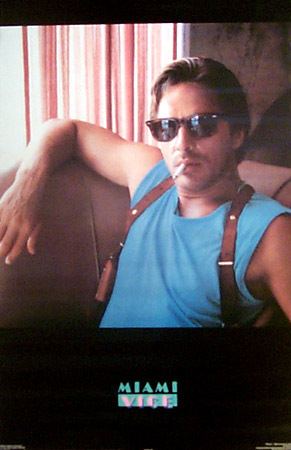
Grandma’s brown hair was cut short, permed and curly. She’s tall, thin, and wears glasses. She sat quietly smoking a cigarette in her chair while others opened gifts. Then it was her turn. My sister and I were excited to see how she’d react. We’d chosen a poster – maybe not the most practical gift for a grandma – but when we saw it, we just had to get it for her. After unwrapping the tube, she stood up to see what it was. She peeled the plastic off and wrangled the tightly rolled poster open enough to see the image. The grin on her face told us we had a hit! It was Don Johnson – Miami Vice. My grandma had a crush on him. She isn’t your typical grandma.

Learning to Fish

She taught me how to fish with a long bamboo fishing rod. It had no reel – just a fixed length of fishing line and a red and white bobber and hook at the end of the line. She showed me how to thread a wiggly earthworm onto the hook, and to gently toss the line out into the water, then watch for the bobber to dunk from sight. I stared and stared at the bobber, afraid to take my eyes off it. I was convinced fish were nibbling at my worm every time a slight wave made the bobber dip in the water. After pulling in an empty line over and over, I learned to have patience and wait until it really went under. I caught tiny pan fish – perch, bluegills, sunfish – the small fish that lingered in the water in the shadow of the pier. No one in their right mind would do anything other than toss these tiny creatures back into the water, but Grandma meticulously cleaned and cooked my catch, no matter how many fish it might take to make up a dinner.

She taught me never to panic when I got a fish hook stuck in my hand, and how to pinch a worm between my fingernails and break it in two, so I didn’t put more bait on the hook than I needed. She taught me how to scrape the scales off the fish, onto newspapers laid out on the picnic table, and how to clean the insides out just right so they were ready for frying. As I got older, she taught me how to cast with a rod and reel and how to adjust the height of the bobber and sinkers so my worm would hang lower beneath the water line. She helped me untangle the weeds I inevitably pulled in when I set the bait too low. Fishing wasn’t her only specialty, though. She could do anything and feared nothing.

Christmas Present for Grandma

She caught garter snakes and put them in a big glass jar so I could get a good look at them without running away in fear. I was a magnet for leeches when I swam in the lake. I often came out dripping wet, with the slimy back bloodsuckers stuck to my legs, feet, or toes, but she wasn’t phased by them. She sprinkled salt on the leeches which made them curl up and drop off. If that didn’t work, she torched them with her lighter until they released their hold on my flesh. When they fell, she grabbed them to use as fishing bait. She was locked in battle with a Northern Pike she named Moby Dick. She was convinced that her nemesis jumped out of the water every day, just at the edge of her casting range. He was taunting her, and she would best him one day.

My sister and I stayed at my grandparents house on weekends fairly often. We ran up and down the pier, rode around the lake on a pontoon boat (sometimes I even got to steer the boat!), and when we were big enough, took a rowboat out so we could fish further away. Lunch was a jelly sandwich with some chips and a cream soda – quickly inhaled, so we could get back to the business of running around outside. We caught frogs by the dozens and kept them in a bait box hanging next to the pier until it was so full, Grandma made us release them all so they wouldn’t die. We slept in the living room on the pull-out sofa. The sheets were crisp and clean and we fell asleep while Grandma watched her favorite shows on TV – Hee Haw, Benny Hill, Fantasy Island, MacGyver, and her favorite show of all – Miami Vice.

Stowaway from Romania

When I started working on my genealogy research, I was particularly interested in my dad’s family because I knew so little about them.  Members of his family emigrated even later than those in my mom’s family, so you’d think we’d know more, but we didn’t.  His ancestors came from Eastern Europe, fleeing from communism and other kinds of oppression.  They were desperate to assimilate into American culture to forget the repression they’d left.  They didn’t yet trust in the place they’d come to, and they had left large parts of their families behind.  It was painful to talk about the past, and harder to forget it if they did, so they buried it and tried to make new lives here.

One family legend was that my great-grandfather, Simon, had emigrated from Romania as a stowaway on a potato boat.  People in my dad’s family love to tell this story.  It was just after the turn of the 20th century, and the Romanian government was forcing boys into the military, apparently as young as age 12.  Simon’s parents saw World War I coming, and didn’t want to see him get killed, so they tried to convince him to leave the country, but he didn’t want to.  He wanted to stay with his family.

Sometimes when my dad tells the story, Simon was drafted, but ran away and came back home.  In this version, the military found him and put him in military prison, and he escaped again.  By then, he agreed with his parents that he had to leave, so he stowed away on a ship.  Sometimes my dad says Simon escaped and was captured repeatedly.

Other times, my dad thinks he never was in the military at all, and was convinced to leave before they could draft him.  His status as a stowaway was never a question in the story, though.

Simon must have been a fairly lucky guy, because he stowed away on a ship that happened to have a hold full of potatoes, which he could eat on the trip across the ocean and still remain hidden from the crew.  When the ship eventually docked on the East Coast, story has it that he got off and panicked.  No idea where he was, and not able to speak a word of English, he went back down into the hold of the boat.  The boat then left again, travelled through the Northwest passages, and ended up in Chicago, where he decided to brave it and venture out into the world.  He was 18 and it was 1907, and that’s how my dad’s family came to be from Chicago.  So far, I have not been able to validate any of the crazy details that would confirm Simon was a stowaway, surviving on potatoes, but I’m still working on it.  All I know for sure is that he is from a small village in Romania, he ended up in Chicago in 1907, and I happen to like potatoes a lot.

Living in Falls

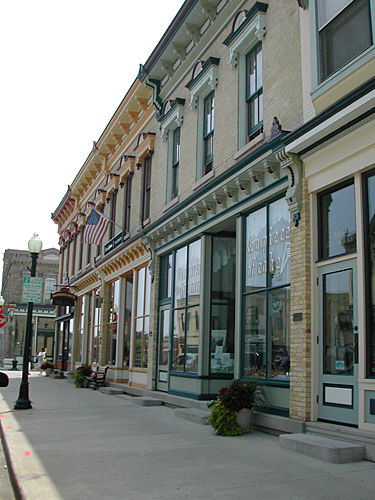
Sheboygan Falls is a little town north of Milwaukee, near Lake Michigan, and was built around the falls of the Sheboygan River in the mid-1800s.  The water over the falls was harnessed to provide power when settlement and industry first came to the area around 1835.  I graduated high school in 1991, and Falls had a population of slightly over 5000 people when I lived there.  With a total area of about 4 square miles, it’s a small community, with a quaint little main street that’s a block long, lined with cream city brick buildings, some with bands of stained glass windows across the tops of the stores.

Some of the main street buildings built in the 1850s were a flour and feed store, a tinsmith, and a drug store.  In the 1870s came a wagon shop and a grocery store.  These buildings were painstakingly restored in the latter part of the twentieth century, some complete with tin ceilings and delicate, precise, richly colorful Victorian painting on the exterior facades.  In 1995, Sheboygan Falls’ tiny downtown district was named a “Great American Main Street” by the National Trust for Historic Preservation.

Today, on the main drag, you will find a flower shop, a couple of bars and restaurants, a photography studio, a shoe store, a furniture store and a dime store.  After hours of genealogy research, I found I am related to Rick, of Rick’s House of Flowers.  At least by marriage, anyway.  The shoe store, Depke’s, was owned by my step-dad’s brother and sister-in-law.  They sold mostly squishy tan or white nurse’s shoes – I think they were called Hush Puppies – and whenever I was there I always felt like I had to be extra quiet – like I was in a library, but one where kids weren’t welcome.

The local dime store is called Evans.  It’s a time warp sort of place – when you enter, it seems you’ve stepped back in time a few decades.  They sell a little bit of everything – outdated, but cheap, clothing, old-lady bras – the kind that are pointy and were popular in the 60s, kitchen odds and ends, some games and toys, and toiletries.  I randomly found an online post that describes it well.  “…you can always stop at Evans downtown for a bizarre dime-store experience – I’ve found deodorant on sale there from 1982!”

The Villager is a popular place to go for a weekend brunch or a Friday night fish fry.  Housed in a building that held the original wagon wheel shop, then an ice cream and sweets store, the place has been beautifully restored to reflect its original appearance.  I’ve been told by many people not from Wisconsin they have no idea what a Friday Night Fish Fry is.  Lots of restaurants in Wisconsin serve fried fish on Friday nights.  I imagine the phenomenon started because of the Catholic restriction against eating meat on Fridays.  Wisconsin is full of lakes and local freshwater pan fish are plentiful.  The most traditional fish to eat on Fridays where I grew up is perch.  If you’re ordering perch at any time other than Friday, you refer to it differently – you’re having a fish lunch or a fish supper, but on Friday, it’s a fish fry.

The rest of Falls is entirely residential, unless you count the various churches that are scattered throughout the town.  Streets are wide, and homes are modest.  It’s a quiet, safe, working-class, family-raising kind of place.  At night, it seems deserted.  A local ordinance prevents anyone from parking on the street overnight anywhere in town.  It originates from the need to keep roads free of cars so the snowplows can clear them in winter, but the parking ban extends year round.  When someone has visitors and needs to park on the street overnight, a quick call to the police department gets approval so the car won’t be ticketed.

Quaint and quiet as the town is, as a teenager, I had the most boring existence you could imagine.  There was nothing that counted as entertainment except a bowling alley on the outskirts of town, and you can only go bowling so many times before it gets pretty boring.  It’s a town of bars, churches, and a few restaurants, which is typical of small Wisconsin towns.  Even when we were old enough to drive into Sheboygan, a few miles away and a bigger city at around 50,000, outside the occasional trip to the mall or the movies, we didn’t go there that often.  Most weekends were spent hanging out at some friend’s house, watching Days of Our Lives, taped on a VCR, the latest MTV videos, or on Sundays, the Packer game, and then The Simpsons.

Occasionally my friends and I got a little creative.  One year, we all pulled CB radios out of our garages and basements – I have no idea how we all managed to have access to CB radios – maybe it’s a Midwestern thing – and we made up a game of car tag.  The rules were: While you were driving around town in your car, you had to give clues to your location over your CB radio.  We all had handles, because to talk on a CB radio, you need a handle.  Mine was “Red Baron” because I drove my mom’s red station wagon.  Whoever was “it” started out the game saying, “Hey everyone, what’s your 20?”  Then in turn, everyone else replied with something like, “This is the Red Baron.  I’m on the street made famous by Freddy.”  If you were “it,” your job was to drive around looking for everyone based on their cryptic clues, and when you spotted someone, flash your brights at them.  Then they were “it.”  What made the game tricky is that we never stayed in one place long, so if you weren’t nearby someone when they gave a clue, it might take a long time to find anyone.  We killed hours in the evenings wandering around town looking for each other this way.

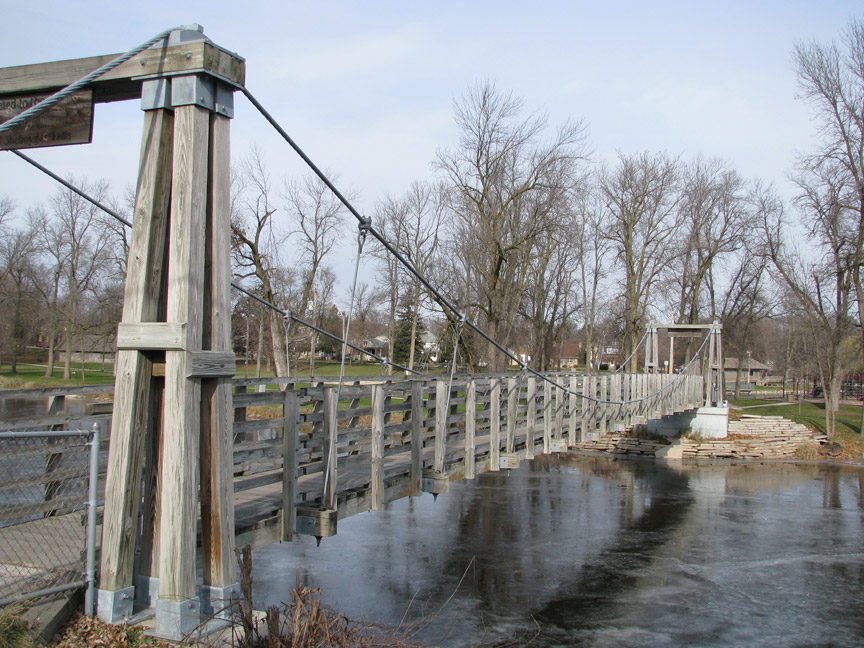
Because we lived in such a small town, we were free to roam wherever we wanted to even when we were much younger, as long as we were home for dinner or when the street lights came on.  Through junior high, I spent a lot of time outside the house, hanging out with friends.  We met at River Park, a large park built around the Sheboygan River that ran through the center of town, or played catch with a friend on the huge high school athletic field, or we rode our bikes around town from one friend’s house to another’s.  My sister and I were latchkey kids, getting ourselves off to school in the morning, and hanging out at home alone until my mom got home from work.  In the summer, we were home alone all day long.  There weren’t many rules, except that we couldn’t have anyone over to the house without prior permission, we had to do our chores every day, and if the tornado warning bell went off, we had to get into the basement right away and turn on the old AM radio to listen for weather alerts.  Sitting in the musty, dingy basement was boring after the excitement and adrenalin rush of hearing the alarm wore off.  We used it only for doing laundry and for certain kinds of storage because it got damp and anything not made of plastic got moldy.  We kept a couple beat up chairs down there for the times we were stuck waiting for the all-clear from a possible tornado.

In school, at recess during the winter, we played games that would almost certainly be banned today.  The game I loved most was “King of the Mountain.”  As snow piled up, snowplows pushed all the snow into a huge pile on one end of the playground.  When the bell rang for recess, we made a mad dash to the snow pile, which was probably a good 10 feet high or more.  Whoever scrambled up to the top first started out as King of the Mountain.  Everyone else did their best to knock that kid down, while he or she worked hard to hold the coveted position at the top of the mountain.  There were the occasional injuries – a broken arm or collarbone, and scraped faces from sliding down the icy hill when you were knocked over – but we didn’t mind the risks.  It was just good, plain, Midwestern winter fun.

Green Bay Packers

It’s clear that I’ve benefited greatly from the things my grandparents gave me – love, support, life lessons, and exciting experiences.  One of the passions in my life – and there aren’t that many – is Green Bay Packer football.  You can’t grow up in Wisconsin and avoid football.  It’s bigger than religion and I didn’t know a single family that wasn’t fanatical about the Pack.  My grandpa was no exception, and he passed his football passion on to me.  I spent plenty of Sundays watching the game with him.  He put out cheese and crackers and sliced summer sausage, potato chips and French onion dip, cheese curds and pickles, and we watched the game in the basement, in front of a crackling fire, as we munched on snacks.  He explained the rules to me, patiently describing why someone was called for one of a thousand types of fouls, and we generally expressed our frustration that Green Bay always seemed to lose.  Those afternoons were warm and cozy when the weather outside had started to turn cold.  I was comfortable, happy, and relaxed.

Green Bay is the only NFL team that is still a publicly-owned team, and it’s the pride of Wisconsin, no matter how much they lose.  In the past 15 years, they haven’t done so badly – but when I was growing up, they were a losing team for a long time.  Things turned around when Brett Favre started playing in 1992, and they won a Super Bowl in 1997.  When I was in 6th grade, there was a contest at my school to see who knew the most about the Green Bay Packers.  There were probably twenty questions or so about the team and its history.  I won the contest, which made my grandpa proud.  The prize was a book about the team, which I gave to him to add to his collection.

Grandpa was a football player in his youth.  When he played, they still wore leather helmets and flimsy pads.  He was a tailback in high school, and was good enough to get a partial scholarship to college to play.  He wasn’t able to go because the scholarship didn’t cover all his expenses, and his family didn’t have the money to help him.  He always regretted he didn’t get to play college ball.  He is a devoted fan and loves the Packers almost as much as he loves shooting and hunting.  He has framed autographs from famous players hanging on a wall in his house, and God knows how many books on football and the Packers.

He was at the infamous Ice Bowl between Green Bay and Dallas in 1967.  I have no idea how he sat through that game in the open air at Lambeau Field without getting frostbitten.  The temperature at game time was -13 degrees, and the wind chill brought it to a ridiculous -40 degrees or so.  It was a championship game, though, and my grandfather wasn’t going to miss it.  His brother was with him, and wanted to leave because his feet were completely numb, but my grandpa wasn’t having it.  They stayed, and watched Vince Lombardi and the Packers pull out a win with seconds on the clock.  The victory put them in Super Bowl II and led to their second world title in a row.

Fans that hadn’t somehow gotten season tickets in the early days put their grandchildren on the waiting list, hoping by the time they are adults, a set of tickets might come available.  People that own stock in the team are fiercely prideful of their position as owners, even if they hold no actual influence over what happens with the team.  In 1997, Green Bay issued new stock for the first time in almost 50 years.  The stock can’t be traded, and has no intrinsic value, but many great Packers fans would want to own a piece of the team.  The new stock was going to be issued for a couple hundred dollars a share, and the point was to raise more money for the team.  Since the team is publicly owned, they have no rich owner to fill their coffers.  The public supports the team – stadium and all.

I bought a single share of stock that year for my grandfather as a Christmas gift.  When it came time for him to open his gift, my entire family was completely silent.  You could have heard a pin drop in the room.  Grandpa slowly unwrapped the flat package to find a FedEx envelope inside.  He fumbled with it for a few seconds, clearly confused about what this gift could be.  He slid two pieces of paper out, lifted his head slightly so he could read through the bifocals on the lower part of his eyeglasses, and after he got through the first sentence of the letter, he broke down in tears.  It read, “Congratulations!  You are the proud owner of one share of Green Bay Packers stock.”  The second page was the stock certificate itself.  I don’t think there was a dry eye in the house when we saw his reaction.

Although he owns only a single share, he started going to shareholders meetings in Green Bay, and he loves the fact that he is a tiny bit closer to the team he’s worshipped his entire life.  The stock certificate is framed on his wall with all his other Packer memorabilia.  Even though I live in California now, I never miss a single Packers game.  I have DirecTV’s NFL Sunday Ticket so I can see them play every week, and I often call my grandpa after the game to discuss how it went.  Sometimes, in a big game, I’ll call him 3 or 4 times, excited about how close they are to winning, or frustrated that they made a boneheaded play and turned over the ball.  If the phone rings when the Pack is playing, my grandparents always know it’s me calling.

When I finished my undergrad degree, my partner surprised me with a wonderful gift – 4 tickets to see Green Bay play Minnesota on a Sunday night.  She got 4 tickets because she knew I’d never want to go to a Packers game without Grandpa.  We flew home for the weekend and took my grandpa and my mom’s husband to the game with us.  We made a day of it, visiting the Packers’ Hall of Fame, and spending an hour or so in the massive memorabilia store at Lambeau Field.  Brett Favre had defected to the Vikings and was playing his second year there, what would be the last in his storied career, and we got to watch the Packers beat him that night, on their way to another Super Bowl win.