A funeral in winter

A more somber post today. The writing prompt that struck me in Old Friend from Far Away was “Tell me about a funeral you attended in winter,” so I went for it. For those of you who have read my previous post, Memories with my grandmother, this story is not about her – it’s about my other grandmother, my father’s mother.

My grandma died in 2004, in January, just days after the New Year. Few of us had come home for the holidays that year. Not me or my cousins; not my sister, her kids, or my uncle. It was a smaller gathering than normal at Grandma’s house on Christmas Eve, but I don’t think she minded. She was proud of all of us for the lives we lived in faraway places she’d never seen, doing complicated jobs she never understood. She’d lived through The Great Depression, some of her childhood spent in an orphanage when her widowed mother couldn’t raise enough money to provide for her and her brother. She understood that people didn’t always have money to spare, and never wanted us to feel badly on those years we didn’t make the trek back to Wisconsin.

We minded, though. We minded a lot. We had been too busy or too broke to come home just a week and a half earlier, yet here we all were, travelling for a funeral instead of a holiday. It seemed fitting punishment that we experience her death in the darkest, windiest and most wickedly cold days of the year.

In the first couple days after her death, my aunt was a wreck, unable to decide what to put in Grandma’s obituary, afraid she’d left someone out of the “survived by” list, but by the time we got to the wake, she’d stopped torturing herself and decided she’d done the best she could.  The mood at the wake was somber, but not excessively so. She was 90, had lived a long life, and she was ready to go. In many ways, she had been ready since the day her husband died thirteen years earlier. We were sad, but we knew her last days had been full of joy, despite some of us missing the festivities.

I remember being astonished at the vigor in her voice when I called her on Christmas Eve. We talked for a half hour, about everything and nothing. She told me about the latest electronics my aunt bought her, laughing her infectious golden laugh at how she’d never be able to figure out how to use them. She chuckled that still no one visiting could outlast her in the evening.  For years, she’d kept late hours, watching TV and doing crossword puzzles until 4am, sleeping into the afternoon.  She was eager to hear anything I could think of to tell her. I spoke with my dad after we finished. “She sounds great, Dad! It’s like she’s ten years younger! She hasn’t sounded so good in such a long time. I just can’t get over it!” He agreed, with a smile in his voice, and I hung up a minute later to sounds of laughter and music in the background. They say that happens for some people right before they die – they feel wonderful and alive and healthy for no reason anyone can point to. It’s the body’s way of sending you off with a parting gift. I hope that happens to me.

The day after the wake, we held her funeral. We drove in a few cars to the cemetery and gathered in the snow next to a dark and frozen hole in the ground. Everything was gray that day. The sky, the bare trees, the casket, the light, my father’s face. I don’t remember what words were said. I don’t remember who stood where. In those moments, in the punishing cold, surrounded by my family, I was alone with only my thoughts, and even they were fleeting. I simply stood and existed in the whipping wind and desperate cold for what seemed like both an instant and a day all at once.  The wind went through me and I didn’t fight it.  I just felt it in every bone in my body.

After the funeral and lunch at a nearby restaurant, we all gathered at Grandma’s house, determined to deal with her things as a family, as a team, so my aunt wouldn’t have to handle it all alone.  Everyone was encouraged to find something of Grandma’s they wanted to keep, whether for practical or sentimental reasons.  We packed boxes of bedding and dishes, marking them with the name of whoever it was that would take them home.  Her furniture and jewelry was split among family members, and her clothes packed away to give to Goodwill.  After everyone else had claimed what they wanted, I chose a print that I’d always admired.  It was a Picasso print, something that stood out in my mind when I thought of her house.  It hangs on my dining room wall now, a happy reminder of my grandmother that I look at every day.

Piles of papers had to be reviewed and lists made of who needed to be contacted with the news that she was no longer with us.  Social security, a realtor to list the house, her credit card company. As I rummaged through odd notes and papers in Grandma’s bedroom, I found an obituary she’d written for herself.  When I realized what it was, I felt like the wind had been knocked out of me.  I couldn’t comprehend writing my own obituary.  I read it a few times, slowly, imagining her lying in bed in the wee hours of the morning, jotting a few paragraphs in a pocket-sized notebook, writing her own brief summary of her life.  It was simple, not very wordy, written with pride about those she would be leaving behind, and focused mostly on the idea that she’d gone to be with her husband.  Though I don’t believe in heaven, when I read her handwritten notes, I sincerely hoped I was wrong, and that she had found Grandpa again.

You don’t like grass?

I have a friend who doesn’t like grass. Actually, she detests grass. When she first confessed her disdain for the odd patch of green we had come upon in the city, my face crinkled up in confusion. “What do you mean, you don’t like grass?” In fact, my face is now crinkled up in confusion as I write this. Who hates grass? I guess I can understand not being excited by it, but to hate it, despise it, as she does – I mean, come on. Seriously?

Grass is not a subject that comes up often in our conversations, but when I have the opportunity, I mention it. Sometimes, I bring it up in the company of others – just to see whether I’m the only one that thinks it’s crazy to hate grass. Sometimes, I mention it to my friend as a reminder to myself that our friendship is true – so true, I have intimate knowledge of her weird grass phobia. We have certainly graduated beyond the deep things in life and on to the completely random and mundane. To me, that’s a sign of a good friendship.

A few weeks ago, we attended the wedding of a mutual friend that took place on the lawn outside a log cabin in the Presidio. As we were walking to take our seats, it occurred to me she was walking on grass, and in high heels, to boot! I grabbed her shoulder from behind as we were nearing our row of folded metal chairs and said, “How are you handling it? Are you doing OK?” I didn’t have to mention the word grass – she knew exactly what I was talking about. She said she was OK – she knew she only had to step on it for the ceremony, and when that was over, we’d be inside the log cabin drinking the night away. She did say she wished she’d brought her flask, but she thought she could handle it. I was glad.

I’m still unsure why she hates grass as much as she does. She did grow up around LA. Maybe that’s at the root of the problem. I grew up in the Midwest where there is more grass than you could ask for. There were things about the grass I hated – mowing it weekend after weekend when it was supposed to be my step-dad’s job. Being harassed if I didn’t walk the mower across the lawn in exactly the right pattern. Inevitably spilling it on the driveway when trying to empty the unwieldy canvas bag that caught the clippings. It’s impossible to sweep freshly cut grass from concrete, by the way. It just sticks, sometimes moves an inch or two, always dying the concrete green the more you attack it with a broom. You should just skip the broom and go immediately for the garden hose on high pressure. I hated cleaning up the dog crap in the back yard before I could run the mower, too – although it was easier than chiseling it out of the frozen snow in the winter. But none of those things made me hate grass itself. One of these days I’ll have to ask again why, exactly, she hates grass. Oh well, to each his own, I guess.

On Employment

Employment has been on my mind quite a bit lately, for a handful of reasons.  First, I’m currently unemployed (though, hopefully, not for much longer) and have been looking for work for the past couple of months.  Second, I picked up Then We Came to the End yesterday, which reminded me of my past job in a marketing agency.  I shared an excerpt of it that made me laugh. Third, I heard from a friend today who just got a new job. Finally, I just finished Before We Get Started, A Practical Memoir of the Writer’s Life, by Bret Lott. In it, he devotes some time to explaining that characters in stories need jobs, and the best place to find jobs for them is to steal your own work experiences.  That could be particularly interesting for me, as I’ve worked in a toilet seat factory.  That’s a story for another day, though.

As all these thoughts about jobs, work, careers, and employment turned over in my mind, I thought back to high school.  I was very bored in high school, but I was pretty good at it, so occasionally, a teacher took an interest and tried to give me something more challenging to do.  In sixth grade, my teacher let me work ahead in math.  I finished the entire year’s work in a month.  I didn’t have to do math for the rest of the year, so instead, I read when everyone else was stuck doing long division or whatever it is you do in sixth grade math.  As a sophomore, a guidance counselor thought I should take the pre-SAT a year early, just for fun.  I did it and it was not fun.

I expected to go to college, but I had absolutely no idea what I wanted to be when I grew up.  No idea.  None.  My school offered a test that was meant to help you determine what job you would be good at doing.  It was a sort of affinity test.  You answered a ton of questions, and it spit out the ideal job for you at the end.  Mine was … believe it … garbage collector.  I’m not kidding.  That’s totally for real.  I wish I had a picture of what my face looked like when my counselor shared that potential career path with me.  Needless to day, I stopped going to her for help, but I still had to figure out what I was going to study.  I liked math, science was OK, and I loved flying in airplanes, although I’d only done it once.  So, the logical conclusion was that I should be an aerospace engineer.  I’m not sure who came up with that, but that became the plan.  I applied to Purdue, got in, was all set to go, but it wasn’t meant to be.  That is also a story for another day.

Suffice it to say, I ended up not going to college, working in factories and restaurants for a few years, and eventually found my way to San Francisco, where opportunities abounded.  I still had no idea what I wanted to do, and almost just stuck with restaurant work.  I thought it would be interesting to work in an office, though, so I signed up at a few temp agencies, and landed a filing job that led to another job working on a big software project.  I’ve worked in technology ever since.  It was purely by accident, and sometimes I’m not sure I really want to work in technology anymore, but it is what it is.

Thinking back to high school again, I remember that we actually did have a computer programming class.  It was early in the PC revolution, but we had a few computers in a lab that used floppy discs – the original floppy discs that were big and actually floppy.  It was still early enough that the poor teacher that had to instruct us had no clue about programming, though.  He sat at a terminal just like we did, cranking out the same assignments so he could try to get a half a step ahead of us.  We were generally instructed to write BASIC programs that spit out various characters in lines on the screen so that they made pictures.  A smiley face, a very square looking dog or cat.  Some of us spelled our names so that each larger than life letter was made up of a bunch of small versions of itself.  Maybe we wrote a program that added up every number from 1 to 100.  Nothing more useful than that, though, and never did it occur to anyone that there might be careers in this newfangled technology.  I wonder if they’ve gotten any better at helping kids figure out what they want to be when they grow up.

Writers’ Platform Building Campaign

I was excited to learn about the Third Writers’ Platform Building Campaign, organized by Rachael Harrie. As a new blogger, I think it will be a great way for me to connect with other writers and take part in some fun writing challenges. Signup is open for a limited time, so if you are interested, get on over to Rachael’s blog and sign up now!

Then We Came to the End

I’ve been kicking around the idea of using a day a week in my posts to share something I’ve loved from the many random books I’ve read.  Mondays seem like a good day for this, since Mondays tend to suck the life out of most of us and it’s easier than writing something new and fresh, which might be better suited to Tuesdays… or Thursdays.

I read Then We Came to the End, by Joshua Ferris a few years ago.  It is a story about many things, but it is primarily about of a bunch of sad Chicago ad agency mucks who are within an inch of being laid off every day because of a bad economy.  At the time I read this book, I worked for a San Francisco marketing agency, which made it just a little funnier to me.  We, too, were constantly waiting for the axe.  Working in marketing is like pimping yourself out to whoever will bid the most – or actually, whoever will bid at all, whether you actually offer what they want, or not.  You want Asian?  OK, we can absolutely give you an Asian and she will be the best Asian you’ve ever seen!  Meanwhile, the boss wraps Maria Sanchez in a kimono.

From Then We Came to the End:

  Jim was so desperate one day to come up with inspiration for an ad, he exhausted his traditional list of people, broke down, and called his uncle Max.  “You know how when you buy a new car,” he began – and immediately Max interrupted him.

  “I haven’t bought a new car in thirty-five years,” said Max.

  Jim suspected then that this was probably not a man with his finger on the pulse of the buying public.  Patiently he tried explaining his assignment.  When people buy a new car, he said, they usually have an image of themselves that corresponds to the car they buy.  Jim wanted to know from Max how Max would want to perceive himself when purchasing a new ink cartridge.

  “Ink cartridge?”

  “Yeah,” said Jim. “You know, for your printer.”

  “Uh-huh,” said Max.

  We had a client at the time whose marketing objective was to make their customers feel like heroes when purchasing one of their ink cartridges.  Our charge in every communication was to inspire the potential buyer with the heroic possibilities of man-using-ink-cartridge.

  “I want to see myself as Shakespeare,” Max said.  “What’s this for, anyway?”

  Shakespeare, thought Jim.  Shakespeare.  That’s not bad.

  “It’s for a client of ours,” he said. “They make printers and ink cartridges and that sort of thing.  I’m trying to come up with an ad that makes you want to buy our specific ink cartridge after you see our ad because it inspires you and makes you feel like a hero.  Will you tell me more about wanting to feel like Shakespeare?”

  “So you’re trying to sell ink cartridges?”

  “That’s right.”

  Another long pause.  “Do you have a pen?” his uncle asked.  He began to quote: ” ‘It was the best of times, it was the worst of times, it was the age of wisdom, it was the age of foolishness, it was the epoch of belief, it was the epoch of incredulity…’ “

  Finally Jim reached out for a pen.  He tried to keep up with him.  At a certain point, Max stopped quoting and told Jim the lines should start to fade out, gradually at first, eventually disappearing altogether.  Then he suggested the headlind. “A Great Writer Needs a Great Ink Cartridge.”  The small print could explain how, if ink cartridges had been used throughout time, the history of literature might have been at stake using a cheap ink cartridge.

  Not only was Jim startled that his uncle could quote what he thought was Shakespeare seemingly off the top of his head; he was floored by the speed and ingenuity of his advertising abilities.  Who was a greater hero than Shakespeare?  And the person encountering the ad that his uncle had just pulled out of his ass could immediately put himself in Shakespeare’s shoes.  Max had just made a million Americans feel exactly like Shakespeare.  He told Max he’d missed his calling.  “You should have been a creative,” he said.

  “A creative?” said Max.

  Jim explained that in the advertising industry, art directors and copywriters alike were called creatives.

  “That’s the stupidest use of an English word I ever encountered,” said Max.

  Jim also told him that the advertising product, whether it was a TV commercial, a print ad, a billboard, or a radio spot, was called the creative.  Before he hung up Jim asked Max for two more examples of great pieces of literature, suspecting that an entire campaign could be generated from Max’s concept.

  Sometime later that afternoon, Max Jackers surprised Jim by calling him back.  “You folks overthere,” said Max, “you say you call yourselves creatives, is that what you’re telling me? And the work you do, you call that the creative, is that what you said?”  Jim said that was correct.  “And I suppose you think of yourselves as pretty creative over there, I bet.”

  “I suppose so,” said Jim, wondering what Max was driving at.

  “And the work you do, you probably think that’s pretty creative work.”

  “What are you asking me, Uncle Max?”

  “Well, if that’s all true,” said the old man, “that would make you creative creatives creating creative creative.”  There was silence as Max allowed Jim to take this in.  “And that right there,” he concluded, “is why I didn’t miss my calling.  That’s a use of the English language just too absurd to even contemplate.”

  With that, Max hung up.

Remembering teachers

Well, I’ve had to skip another writing prompt from Old Friend from Far Away.  This one was : “Give me a picture of a teacher you had in elementary school.”  I don’t remember a single teacher from elementary school.  In fact, I can barely remember any from junior high, either.  I do have some high school teacher memories, though.

Falls High School was the kind of place that teachers stayed at for entire careers.  A handful of my teachers had also taught my step-dad twenty years earlier.  One of the more colorful characters was our algebra teacher, who proclaimed loudly every day that there were only three certainties in life – death, taxes, and algebra homework.  His motivation techniques were a bit suspect, though.  Almost daily, he yelled at the class, telling us if we didn’t get our act together in algebra, we’d grow up to be nothing more than basket weavers.  His comb over prevented us from taking him too seriously.  My sister had an English teacher she had wrapped around her finger.  She regularly told him she had a headache and could she put her head down on her desk during class.  Every time, he agreed, and often went so far as to ask the rest of the students in class to be quieter in their discussions so they didn’t disturb her while she was resting.  Every couple weeks he told her she should have her mom take her to see a doctor because she had so many headaches.

In my senior year, my Spanish teacher had to take most of the year off for health reasons, so we got a long-term substitute.  Our sub was an elderly lady who had already retired from teaching, and she had no interest in actually teaching us any Spanish.  Every single day we played bingo in Spanish – yelling “¡Loteria!” when we filled a row on a card.  Most kids couldn’t even get that part of the game right.  It was too instinctive to yell “Bingo!”  Spanish was my first class of the day, and occasionally, I skipped it.  A good friend of mine wasn’t in school anymore, and she picked me up in the morning so we could run to McDonald’s and get breakfast.  The nearest McDonald’s was in Sheboygan – a 15-minute drive one way.  We had just enough time to get to there, run through the drive-through, and make it back to school as my first period was ending.  After missing class a couple times, my teacher asked me what was going on.  I told her that I was going to McDonald’s to get breakfast and, since we were only playing ¡Loteria!, I didn’t think I was missing much.  I wasn’t disrespectful in my tone.  I was just being honest.  She agreed, and told me that as long as I brought her a danish, she wouldn’t mark me absent.

My chemistry teacher was by far the quirkiest of them all.  He must have owned a half dozen of the exact same suit – or he literally wore the same suit to work every single day – it’s hard to say which.  The suit was a dark navy blue, and hung big and baggy on his tall but hunched over frame.  He had white, disheveled hair, thinning on the top of his head.  His glasses were a little crooked, low on his nose, and he personified the cartoonish figure of a mad scientist.  He was known to be a packrat and filled his pockets with oddities.  Rumor had it his need for large pants pockets was satisfied only when his wife replaced them by sewing tube socks into his pants.  These new pockets were constantly filled to the top, so his legs looked lumpy from the knee up.  He was also a photographer, and for some reason, he needed to have a few cameras on his person at all times.  He slung the camera straps over his shoulders underneath his suit jacket, which added another odd bulkiness to his appearance.  He drove a small pickup truck with a camper in the bed of the truck that extended over the cab.  We could never figure out why, but the thing must have had a dozen antennae sticking off the roof.  We could imagine having one or two for a CB radio or something, but why so many?

He was the hardest teacher in school, and graded strictly on many things besides the actual content of the course.  Most of the time, he had us grade each other’s papers.  We’d pass our papers one person back in the row, and we had to use red pen to mark each other’s answers wrong.  If, as a grader, we didn’t use a red pen, that resulted in a dock on our own test scores.  If we didn’t write our names on our assignments in exactly the right way, we’d get docked for that, too.  He was also a pilot, so we had an aviation class in school, an odd elective for a small rural high school.  I took the course because I thought I wanted to learn to fly one day, and part-way into the first term, I dropped the class, because no matter how hard I worked, the grades I got made me think I was going to fail.  He graded on a curve, and I found out after I dropped the class that I was getting an A, because despite my low percentages scores, they were still at the top of the class.  Our assignments often seemed impossible.  Make a paper airplane that will sail down the stairs at the end of the hallway.  The stairs doubled back halfway down, though, so the plane had to somehow make a 180 degree turn halfway through its course.  No one succeeded.

From ‘My Father’s House’ – Sylvia Fraser

I just finished reading My Father’s House – A Memoir of Incest and of Healing, by Sylvia Fraser.  It’s an amazing book.  The story is compelling, but her writing is rich, powerful, and visceral, and elevates the memoir to a level beyond the details of her life alone.  Below is just one example, and the book is crammed full of writing like this:

“I know it’s winter because when I look at my feet I don’t see them for snow.  I know it is winter because my nose drips like an icicle, my hands are white snowballs that must be stuffed in pockets.  I know it’s winter because sounds are muffled, words taste cold, steam hisses out of radiators and light slips off the page of Kant’s “Critique of Pure Reason” almost as soon as it arrives. I know it’s winter because my mother writes letters that announce: “Yesterday my wash was like boards on the line.  I keep asking the new milkman to put the milk between the doors but he doesn’t seem to hear and this morning it was half out of the bottle again.  Is your laundry getting done?” I know it’s winter because all the evidence a posteriori and a prior points that way, and I am nothing these days if not empirical and rational.  It’s winter, but it doesn’t matter.  My life takes place in enclosed spaces: halls, cells, corridors, cubicles.  I scratch words on the pulpy lobes of my brain like a medieval monk creating palimpsets.  I sweat dust.”

My favorite bits from that paragraph are “I know it’s winter because …, words taste cold, …” and “…light slips off the page almost as soon as it arrives.”  I filed this post under Inspiration, because this kind of writing makes me slow down and savor the words.  I don’t know if it qualifies technically as inspiration because it doesn’t cause me to start writing myself, necessarily – but it reminds me why I love literature and why I continue in my personal battle with words.

Give me a memory of the color red… or not.

I am one of those people that likes to follow the rules.  Pretty much all the rules – all the time.  I take rule following to a ridiculous level that annoys the hell out of many people that associate with me.  I’m lucky they like me enough to let it go, but seriously, the term rule-bound was invented just to describe me.  I abhor being late to anything – in fact, if I’m not at least fifteen minutes early, that qualifies as late.  I always put the shopping cart away in a parking lot.  I never miss a deadline of any sort.  I don’ ride a bicycle much, but if I did, I would wear my bike helmet, use the correct turn signals, and never ride through a stop sign or light even if no one else were coming.  I wait for the walk sign even when the street is empty.  You get the point.

This came up for me today because I was about to sit down and work on another writing prompt from Old Friend from Far Away.  The prompt was ‘Give me a memory of the color red…’  I read the prompt and an example the author provided.  I was to describe a memory of red, without using the word red.  I pulled up a new post and titled it, ready to sit down and see what I could crank out in ten minutes.  Nothing…   More nothing…  Even more nothing…  It seems the color red triggers absolutely zilch in my brain.  After staring at my screen for a few minutes, I thought to myself – well, maybe I should just skip this one.  Then the rule-follower in me screamed, “No!  What are you thinking?  You have to do every exercise in this book!  And you have to do them in order!”  So I got up and went outside for a cup of coffee and a cigarette.  This is a tactic that often works for me when I need to mull something over in my head for a bit.  Not this time.  I came back, sat down, and stared some more.  The only thing that came to mind was an apple, and I don’t feel like writing about apples at all.  I have no interesting stories that involve apples.  Grapes, maybe, but apples?  No.

So, I am taking a leap here – I’m going to break the rules.  I’m not going to come up with a memory of the color red for today’s writing prompt.  I’m going to skip it – at least for now – and see how I feel about the next prompt, which is “Give me a memory of a sound…”  This one I think may come a little easier.  If someday, the color red sparks something in my mind, maybe I’ll come back to it, but I’m going to try to force myself NOT to write about things that don’t spark anything for me just because I normally feel I need to do every single exercise in front of me.  We’ll see how well that works out.  I didn’t go to Catholic school in the days where a nun could whack you on the knuckles with a ruler if you disobeyed – but, I think my inner rule-follower was one of those nuns, and she retired into my brain in order to keep me in line.  I may have a real battle on my hands, here, but I’m giving it a shot.  Wish me luck.

Memories with my grandmother

Another writing prompt in Old Friend from Far Away – Give me a memory of your mother, aunt, or grandmother. Begin with “I remember…”

I remember my grandmother opening a Christmas gift from my sister and me. On Christmas morning, we rushed my parents to get ready so we could get to our grandparents house on Wilke Lake as early as possible. It was only a half hour drive away, but each minute of that morning before we got to dive into presents was like a slow torture. My uncle would have driven up from Illinois the night before, and my aunt and her husband would pick up our great-grandmother on their way out. As soon as everyone was there, it was present time!

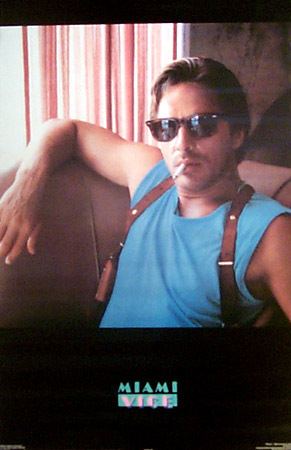
Grandma’s brown hair was cut short, permed and curly. She’s tall, thin, and wears glasses. She sat quietly smoking a cigarette in her chair while others opened gifts. Then it was her turn. My sister and I were excited to see how she’d react. We’d chosen a poster – maybe not the most practical gift for a grandma – but when we saw it, we just had to get it for her. After unwrapping the tube, she stood up to see what it was. She peeled the plastic off and wrangled the tightly rolled poster open enough to see the image. The grin on her face told us we had a hit! It was Don Johnson – Miami Vice. My grandma had a crush on him. She isn’t your typical grandma.

Learning to Fish

She taught me how to fish with a long bamboo fishing rod. It had no reel – just a fixed length of fishing line and a red and white bobber and hook at the end of the line. She showed me how to thread a wiggly earthworm onto the hook, and to gently toss the line out into the water, then watch for the bobber to dunk from sight. I stared and stared at the bobber, afraid to take my eyes off it. I was convinced fish were nibbling at my worm every time a slight wave made the bobber dip in the water. After pulling in an empty line over and over, I learned to have patience and wait until it really went under. I caught tiny pan fish – perch, bluegills, sunfish – the small fish that lingered in the water in the shadow of the pier. No one in their right mind would do anything other than toss these tiny creatures back into the water, but Grandma meticulously cleaned and cooked my catch, no matter how many fish it might take to make up a dinner.

She taught me never to panic when I got a fish hook stuck in my hand, and how to pinch a worm between my fingernails and break it in two, so I didn’t put more bait on the hook than I needed. She taught me how to scrape the scales off the fish, onto newspapers laid out on the picnic table, and how to clean the insides out just right so they were ready for frying. As I got older, she taught me how to cast with a rod and reel and how to adjust the height of the bobber and sinkers so my worm would hang lower beneath the water line. She helped me untangle the weeds I inevitably pulled in when I set the bait too low. Fishing wasn’t her only specialty, though. She could do anything and feared nothing.

Christmas Present for Grandma

She caught garter snakes and put them in a big glass jar so I could get a good look at them without running away in fear. I was a magnet for leeches when I swam in the lake. I often came out dripping wet, with the slimy back bloodsuckers stuck to my legs, feet, or toes, but she wasn’t phased by them. She sprinkled salt on the leeches which made them curl up and drop off. If that didn’t work, she torched them with her lighter until they released their hold on my flesh. When they fell, she grabbed them to use as fishing bait. She was locked in battle with a Northern Pike she named Moby Dick. She was convinced that her nemesis jumped out of the water every day, just at the edge of her casting range. He was taunting her, and she would best him one day.

My sister and I stayed at my grandparents house on weekends fairly often. We ran up and down the pier, rode around the lake on a pontoon boat (sometimes I even got to steer the boat!), and when we were big enough, took a rowboat out so we could fish further away. Lunch was a jelly sandwich with some chips and a cream soda – quickly inhaled, so we could get back to the business of running around outside. We caught frogs by the dozens and kept them in a bait box hanging next to the pier until it was so full, Grandma made us release them all so they wouldn’t die. We slept in the living room on the pull-out sofa. The sheets were crisp and clean and we fell asleep while Grandma watched her favorite shows on TV – Hee Haw, Benny Hill, Fantasy Island, MacGyver, and her favorite show of all – Miami Vice.

More exercise

On Sunday, killing time and surfing various writing websites, I decided to check for free contests to see if there was anything fitting for me to submit something from my memoir to.  I have no illusions that I’ll win – I’m too new at this, or at least, I’ve been on hiatus so long, I might as well be new at it.  I think it’s good practice, though. Anyway, I saw that there was a memoir contest – 10,000 word maximum – at Memoir (and). I was inspired – then I saw the deadline was today at Noon Pacific time and thought I might be crazy to even try. I had no time free Sunday to start, and had a job interview at 10am on Monday that lasted 3 hours. I’d have less than 24 hours to pull it off. Plus, the current draft of my memoir is more than 80,000 words – probably at least 20,000 words too long, but that’s where it stands at the moment, while I wait for feedback from my editor friend.

I decided to go for it, despite the little time I had to pull something together. I wanted to use some of the material I’d already written, so I flipped through the pages and attempted to pull out what I thought would be a cohesive, but much shorter, story. The stuff I chose was initially 20k words and some change. I spent 6 or so hours trimming it down to 15k – because my brain failed me and for some reason, morphed the max word requirements into 15k instead of 10k. When that much was done, I went back to the contest submission guidelines with a feeling of triumph. That changed to a strong desire to stick a pen in my eye when I realized I really needed to get it down to 10k. I didn’t give up, though. I kept pushing and cutting and trimming and editing, and I came up with something I was comfortable submitting – another 6 hours later. I let it sit overnight, made a few last minute tweaks this morning, and submitted it. I’m exhausted, but my instinct was right – it was really great practice. The word limit made me re-examine every word in every sentence and make tough decisions about which memories and anecdotes really carried the main thread of my story. I recommend going through exercises like this when you get the chance. It’s tough work, but it told me a lot about just how loose some of my writing was, and how much room there was to tighten it up. Mission accomplished.